
Diabetic Neuropathy: What I Wish Every Patient Knew Ten Years Earlier
The Nerve Damage That Builds for Years Before Anyone Notices

Over four decades of medical practice a pattern often repeated: patients with type 2 diabetes (T2DM) who felt fine before, walking in years later with a foot ulcer that wouldn’t heal. By the time nerve damage shows itself this way, the prevention window has already closed. Treatment at that stage can only manage the damage.
Diabetic neuropathy, nerve damage caused by diabetes, is common, largely silent in its early stages, and one of the most treatment-resistant complications of diabetes. But early detection and consistent self-vigilance can shift the odds in your favor.
How Common Is This
Diabetic peripheral neuropathy (DPN) affects roughly 33-50% of people with T2DM, with prevalence climbing past 50% in people who have lived with diabetes for 25 years or more according to a 2021 review in Muscle & Nerve on diabetic neuropathies. The range varies by how researchers define and test for it, but the pattern holds across studies. Nerve damage is often found on a screening exam long before the patient feels anything wrong, which makes regular screening a critical proactive strategy.
What Is Actually Happening to Your Nerves
Two separate processes converge to cause diabetic nerve damage.
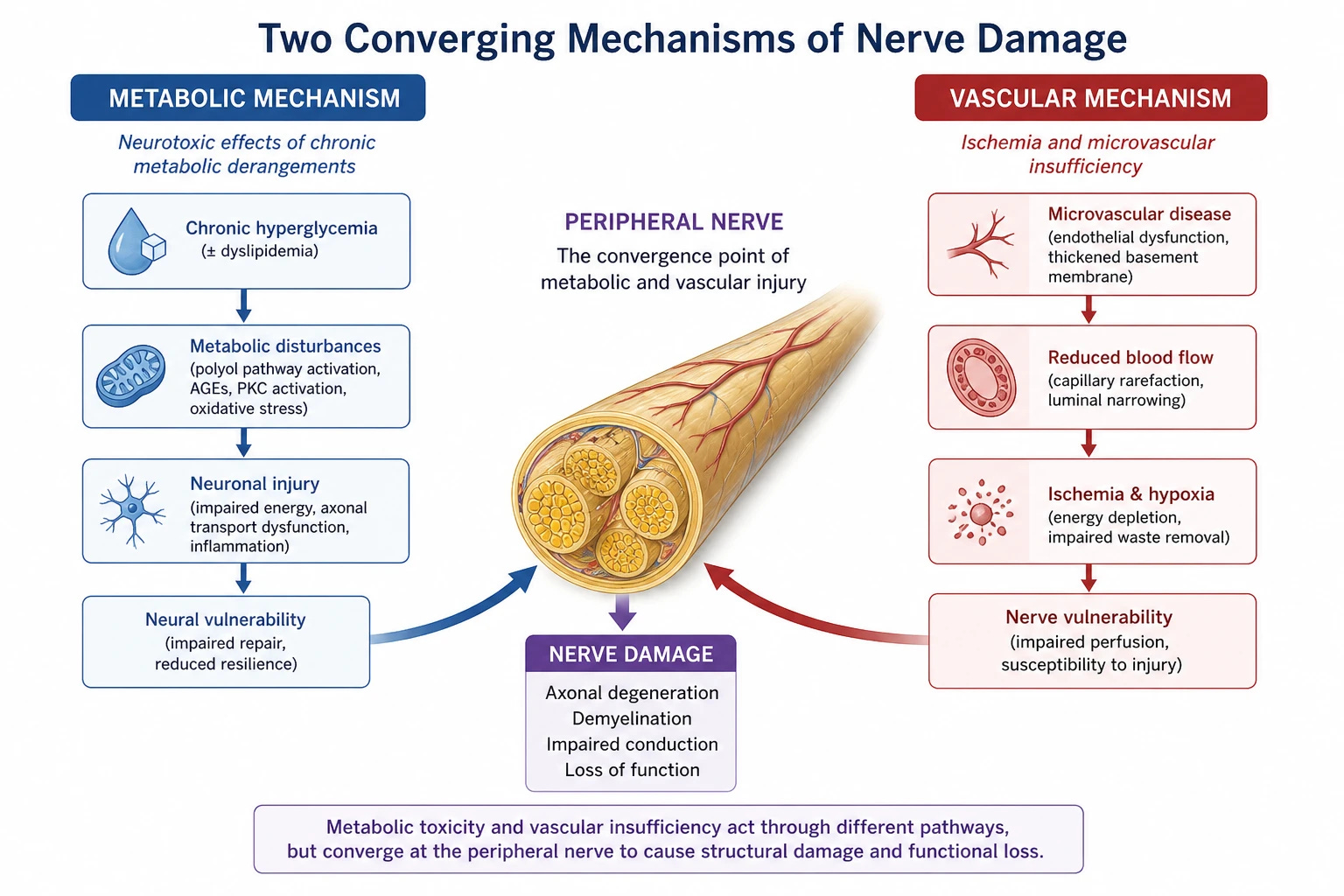
The first is direct injury to the nerve cells themselves from years of elevated blood glucose. Several biochemical pathways, like the polyol pathway, advanced glycation end products (AGEs), and protein kinase C (PKC) activation, are different ways that excess glucose damages the internal machinery of nerve cells over time. These alters proteins, generates oxidative stress, and slowly degrades the nerve’s ability to function.
The second process is vascular: the tiny blood vessels that feed peripheral nerves, called the vasa nervorum, become damaged by the same processes that damage larger blood vessels in diabetes. Starve a nerve of adequate blood flow for long enough and it stops working properly, independent of the direct metabolic injury happening at the same time.
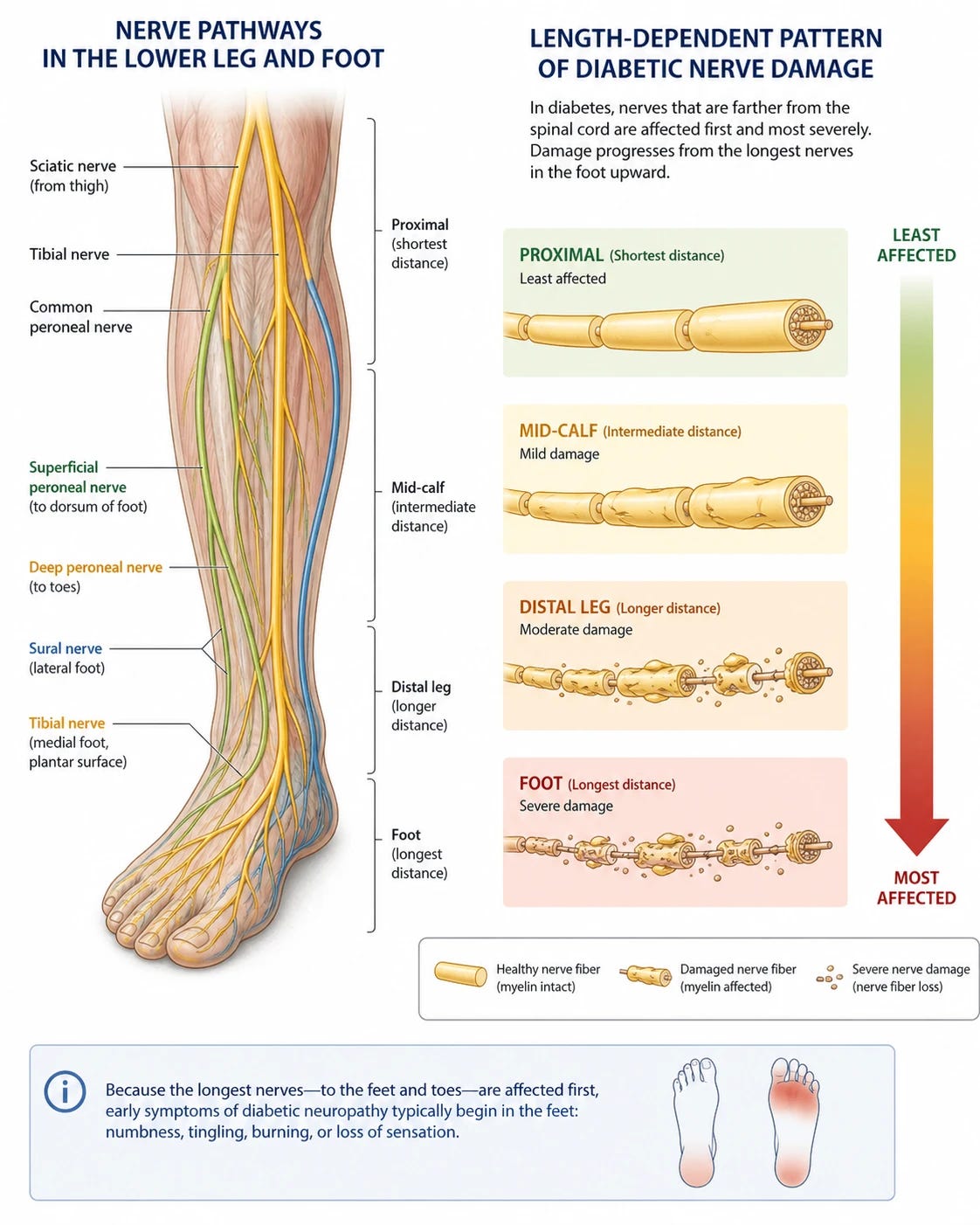
The longest nerves, the ones running all the way down to your toes, are usually affected first since they have the longest distance to be nourished and the most cumulative exposure to injury. Symptoms typically start in the feet and move upward over time.
The Many Faces of Diabetic Neuropathy
Most people, when they hear “diabetic neuropathy,” think of tingling feet. That’s only one presentation among several.
Sensory Neuropathy
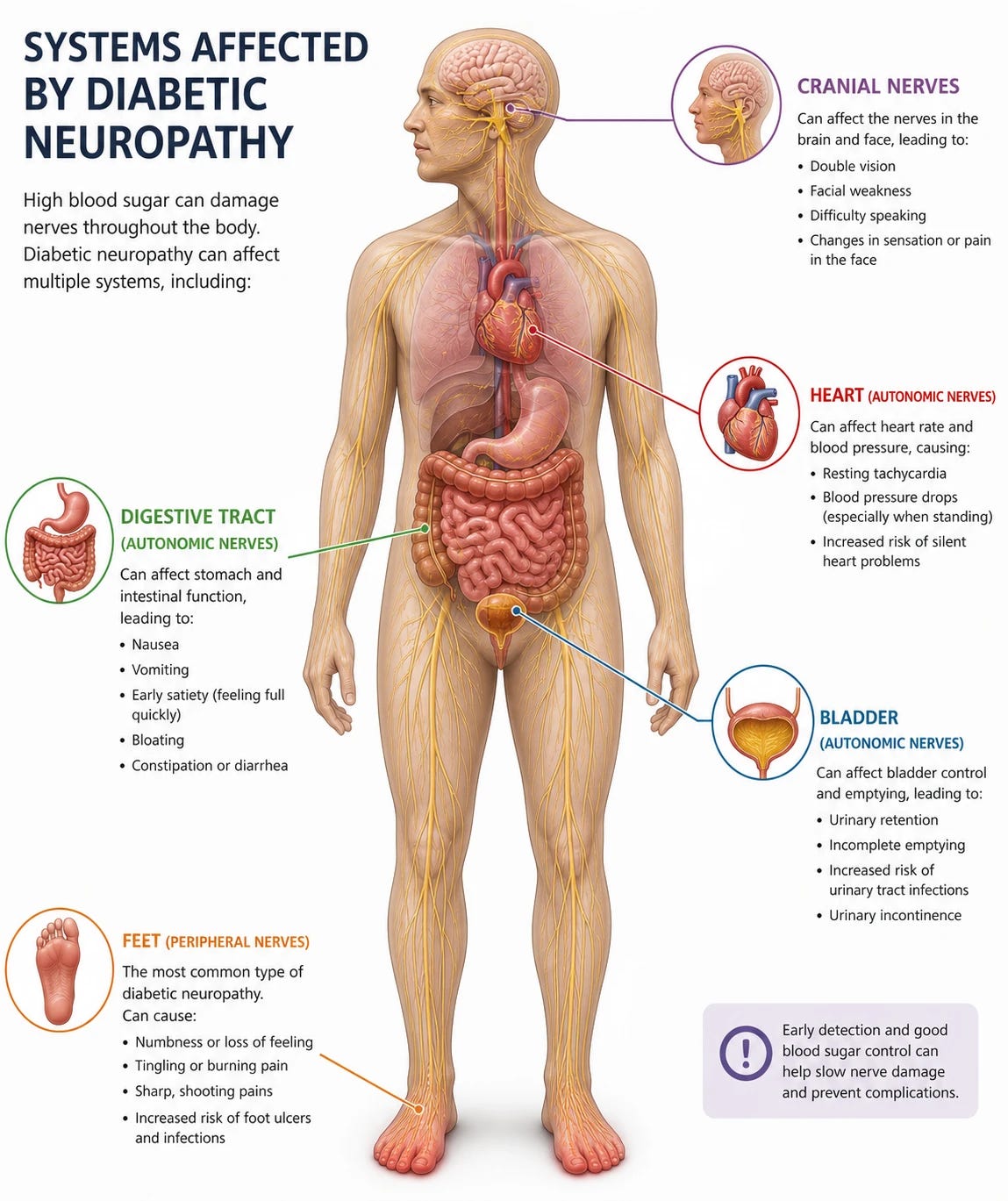
This is the most commonly known one: distal symmetric polyneuropathy (DSPN). It shows up as symptoms including tingling, burning, sharp shooting pains, or pain triggered by things like the touch of bedsheets. It also cause numbness and loss of sensation, which is more dangerous than pain because you can injure your foot and not know it. Symptoms are worse at night and predominantly affect the feet before the hands.
Digestive Symptoms
Autonomic nerves control the muscles that move food through your digestive tract, and when they’re damaged, that movement slows down or becomes erratic. Gastroparesis, delayed stomach emptying, and constipation is are the most common digestive symptom of diabetic autonomic neuropathy. Diabetic diarrhea and, in more advanced cases, fecal incontinence can also occur.
Sexual and Bladder Symptoms
Erectile dysfunction is the most common autonomic symptom of diabetic neuropathy in men, and it’s frequently one of the earliest signs, sometimes appearing before any other neuropathy symptom is noticed. Retrograde ejaculation can also occur. In women, reduced desire, reduced lubrication, and pain during intercourse are the corresponding presentations, though they receive far less clinical attention and often go unrecognized.
Neurogenic bladder, where the bladder no longer empties completely or signals fullness properly, is another consequence. Recurrent urinary tract infections (UTIs) can be an early warning sign of a bladder that isn’t emptying completely.
Cardiac Autonomic Symptoms
Cardiac autonomic neuropathy can cause a persistently elevated resting heart rate and orthostatic hypotension, a drop in blood pressure on standing that causes dizziness or fainting. Most seriously, it can mask the pain of a heart attack entirely. Large studies looking at heart attack patients have found that people with diabetes make up a disproportionate share of those who present without any chest pain at all, and other reviews estimate that roughly 30-40% of people with diabetes experience little or no chest pain during a myocardial infarction (MI).
When to Go to the Emergency Room Today
Most diabetic mononeuropathies, nerve damage affecting a single nerve rather than the widespread pattern of DSPN, come on gradually. Entrapment neuropathies affecting the median or ulnar nerves in the arm, similar to carpal tunnel syndrome, develop slowly and this gradual-versus-acute distinction is well established in the clinical literature on diabetic mononeuropathy.
But peroneal nerve involvement, causing sudden foot drop, and third cranial nerve involvement, causing sudden double vision with a droopy eyelid with normal pupil, tend to come on acutely, over hours to days, not weeks. If you have diabetes and you develop sudden foot drop or double vision you need to seek emergency room (ER) care immediately. The reason: an acute stroke can present identically, and the treatment window for clot-dissolving stroke medication is just a few hours. And diabetes significantly elevates your stroke risk.
If you enjoy evidence-based medical information, subscribe to receive these articles delivered to your mailbox every week.
Hypoglycemia Unawareness
Normally, a falling blood glucose level triggers warning symptoms, shakiness, sweating, a racing heart, that prompt you to treat it before it becomes severe. Autonomic neuropathy can blunt or eliminate those warning symptoms entirely, meaning a low blood glucose episode can progress to confusion, loss of consciousness, or worse, with no warning at all. This is especially dangerous for anyone living alone, where there’s no one else present to notice something is wrong.
The Consequences That Brought People to My Door
Foot Ulceration and Charcot Deformity
Loss of protective sensation in the feet means small injuries, a blister, a pebble in a shoe, a scrape, go unnoticed and unfelt. Left untended, they become ulcers. Combine that sensory loss with reduced blood flow, and those ulcers commonly heal poorly or become infected.
Charcot neuroarthropathy, progressive fracture and collapse of the bones and joints in the foot due to the loss of pain sensation, allows a person to keep walking on a foot that is actively fracturing, unaware anything is wrong until the foot’s structure has already changed shape. Population estimates for Charcot foot vary widely, from well under 1% overall to as much as 13% in high-risk foot clinic populations, and once it develops, amputation risk rises roughly seven to twelve times higher than in diabetic patients without Charcot changes. I’ve observed a higher number patients presenting with Charcot over my last decade of practice.
Foot ulceration and Charcot deformity remain, in my experience, the most preventable of all neuropathy’s consequences, daily home foot exams need to be done by every diabetic patient. I’ll walk through exactly what that routine looks like in a dedicated piece next week.
Falls and Fractures
Loss of sensation in the feet also degrade your sense of where your feet are in space, called proprioception. This is a major contributor to falls and the fractures, particularly in older adults, according to a 2017 American Diabetes Association (ADA) position statement on diabetic neuropathy.
Gastroparesis
Beyond the discomfort of nausea, bloating, and unpredictable meals, gastroparesis complicates blood glucose management itself, because food absorption becomes erratic and harder to match with insulin timing.
Silent Heart Attacks
As covered above, this is arguably the most underappreciated consequence of all, precisely because there’s no warning to notice.
The Compounding Toll on Mood and Sleep
Research cited by the ADA links diabetic peripheral neuropathy to a meaningfully higher risk of depression, with unsteadiness on your feet showing the strongest association in a longitudinal study referenced in the ADA’s 2017 position statement. Sleep disruption from nighttime pain compounds the burden further.
This is an association, not a proven direct cause and effect relationship, but it’s a real and consistent pattern.
What Actually Reduces Your Risk
Prevention is not guaranteed, but the odds shift substantially in your favor with the right approach; that approach is broader than glucose control alone.
Multifactorial Risk Control
The Steno-2 trial, one of the most influential studies in diabetes care, tracked patients with type 2 diabetes who received either standard care or an intensive combined approach targeting blood glucose, blood pressure, cholesterol, and smoking cessation together. Over roughly eight years, the intensive approach cut the progression of autonomic neuropathy by about 60% according to the original Steno-2 results published in the New England Journal of Medicine. An additional 21-year follow-up of the same trial found no significant difference in the progression of peripheral neuropathy itself between the two groups. In plain terms, aggressive multifactorial control clearly protects the autonomic nervous system, but peripheral nerve damage can still progress even with excellent, comprehensive control.
Exercise: A Promising, Still-Developing Tool
A body of smaller clinical trials, including a systematic review pooling results from thirteen randomized controlled trials (RCTs) and roughly 590 participants, has found that structured exercise programs may improve nerve conduction, balance, gait, and neuropathic pain. Some pilot studies have even found measurable increases in nerve fiber density in the skin with supervised aerobic and resistance training. This evidence is still preliminary, the trials are small, the exercise protocols vary considerably, and researchers call for larger studies to confirm these findings.
Exercise may improve nerve function and symptoms but has not been shown to reverse established nerve damage.
Medication for Pain
For neuropathy that has become painful, duloxetine and pregabalin show the most consistent effectiveness in head-to-head comparison trials, with gabapentin, while cheaper, showing weaker effectiveness at longer follow-up periods. These medications manage symptoms and improve quality of life, they do not treat or reverse the nerve damage.
Where This Leaves You
You don’t have to become one of the many patients who discovered their neuropathy only after it had already cost them something. Prevention isn’t guaranteed but the odds shift dramatically in your favor with consistent vigilance and early detection.
Learn to recognize early warning signs.
Get annual neuropathy screening from your physician.
Daily foot examination is the single most actionable step (watch for the dedicated foot-care piece essay next week).
Found this article useful? Share your thoughts. Join the conversation below.
The Metabolic Archives is for educational and informational purposes only, and is not intended as medical advice, diagnosis, or treatment, and does not constitute a doctor-patient relationship. Do not adopt any recommendation discussed in any article or guides published here, make changes or abandon any prescribed medical treatment without prior consultation with your physician. Always seek the advice of your physician or other qualified health provider for any questions regarding your medical condition and recommended treatment options.
By reading this post, you acknowledge that you have read and agree to the Terms of Service of The Metabolic Archives, which govern all use of this content including restrictions on reproduction.
© 2026 The Metabolic Archives. All rights reserved.