
Lifestyle Modification: The Most Powerful Treatment You Were Never Taught
Part Two: The Food That Was Designed to Keep You Hungry

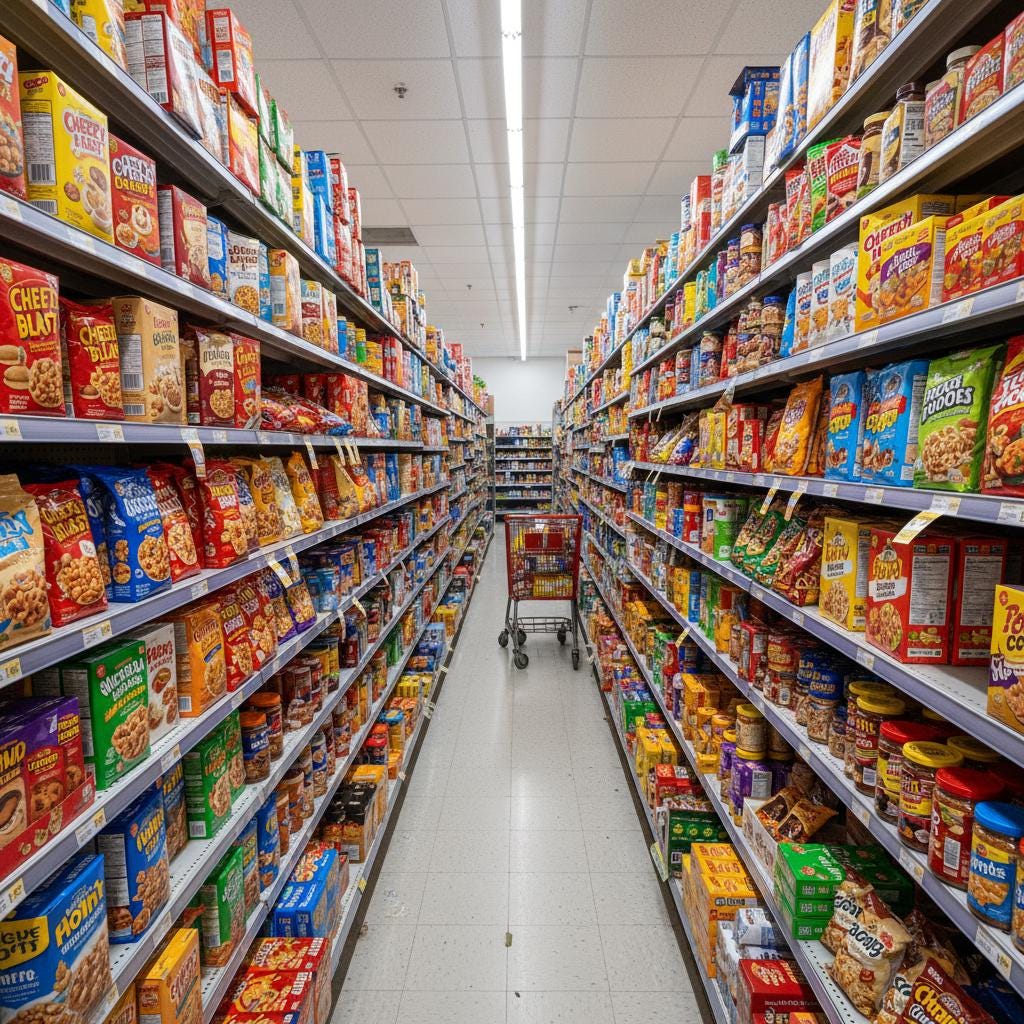
One of the most common pieces of advice in lifestyle medicine is to avoid ultra-processed foods. What almost nobody explains is what ultra-processed food actually is, how to recognize it, or why is harmful to you.
What Ultra-Processed Food Is
The accepted scientific standard is the NOVA classification system, developed by Carlos Monteiro at the University of Sao Paulo in 2009 and adopted by the UN Food and Agriculture Organization as its preferred framework for dietary analysis. NOVA divides food into four groups based on the extent and purpose of processing.
Group 1 is unprocessed or minimally processed food: vegetables, fruit, meat, fish, eggs, plain grains, legumes.
Group 2 is processed culinary ingredients: oils, flours, salt, sugar: things used to prepare food at home.
Group 3 is processed food: canned fish, cured meats, simple cheeses, fermented foods: recognizable ingredients combined in recognizable ways.
Group 4 is ultra-processed food.
NOVA Group 4 products are industrial formulations manufactured primarily from substances extracted or derived from food: refined starches, hydrogenated oils, protein isolates, high-fructose corn syrup. These are combined with additives not found in any home kitchen: emulsifiers, artificial flavors, colorants, humectants, anti-caking agents, preservatives.
They are designed for palatability, shelf stability, and profit, not nourishment.
A useful field test: read the ingredient list. If it contains substances you would not find in a kitchen or if the list runs longer than a paragraph, you are almost certainly looking at a Group 4 product.
How We Got Here
In the 1950s and 1960s, two competing hypotheses existed for the dietary driver of coronary heart disease. John Yudkin, a British physiologist, identified added sugars. Ancel Keys, an American physiologist, identified dietary fat. What resolved the debate was not science, was money.
The Sugar Research Foundation identified an existential commercial threat in Yudkin’s work. Internal documents later obtained by researchers at UCSF showed that the Foundation recognized as early as 1954 that a low-fat dietary environment would increase per-capita sugar consumption by more than one third.
The Foundation funded Harvard nutrition researchers in the mid-1960s to produce a literature review on dietary fat and coronary heart disease. The result was published in the New England Journal of Medicine in 1967 without disclosure of industry funding, a standard that did not yet exist. The review dismissed Yudkin’s sugar hypothesis and elevated Keys’s fat hypothesis.
A 2016 analysis of the Sugar Research Foundation’s own internal correspondence, published in JAMA Internal Medicine by Kearns, Schmidt, and Glantz, documented this sequence with primary source evidence. The scientific consensus that emerged from the 1960s and 1970s reflected what the industry had paid to produce.
The 1977 Policy Moment
The Senate Select Committee on Nutrition and Human Needs, chaired by Senator George McGovern, issued Dietary Goals for the United States in January 1977. The goals recommended reducing fat, cholesterol, and refined sugars while increasing complex carbohydrates and fiber. Three of eight senators on the committee dissented, arguing the evidence more strongly implicated refined carbohydrates than fat.
The food industry faced an immediate commercial problem. Fat provides palatability, texture, mouthfeel, and satiety; remove it and the product fails on the shelf. The solution was systematic substitutions. Sugar was added to restore taste, salt was increased to restore flavor, partially hydrogenated vegetable oils (trans-fats) were expanded to restore texture and extend shelf life. A growing toolkit of industrial additives restored the sensory qualities that whole-food fat had provided naturally.
The Low-Fat Era in a Single Product
No product illustrates the period more clearly than margarine.
Margarine was originally introduced in the nineteenth century as a cheap butter substitute for military and lower-income populations. By the 1980s, it had been rebranded as the heart-healthy alternative to saturated animal fat. It contained no cholesterol, medical societies endorsed it, a public primed to fear butter adopted it widely.
The mechanism that made liquid vegetable oil semi-solid at room temperature was partial hydrogenation: the industrial introduction of hydrogen bonds into unsaturated fatty acid chains. Partial hydrogenation produces trans-fatty acids as a byproduct. Trans fats raise LDL cholesterol, lower HDL cholesterol, and promote systemic inflammation.
A 2006 review in the New England Journal of Medicine by Mozaffarian and colleagues estimated that trans fat consumption was responsible for up to one in five myocardial infarctions per year in the United States. The FDA banned partially hydrogenated oils from the food supply in 2018, nearly four decades after margarine’s heart-healthy marketing era began.
Modern margarines have replaced partial hydrogenation with inter-esterification: a different chemical rearrangement of fatty acids on the glycerol backbone that achieves comparable physical properties without producing the same trans-fat profile. Animal data has demonstrated glucose intolerance and insulin resistance with inter-esterified fat consumption. A 2016 review by Mensink and colleagues in Advances in Nutrition concluded that the potential metabolic health risk of long term inter-esterified fat human consumption warrants serious concern.
The Obesity Timeline
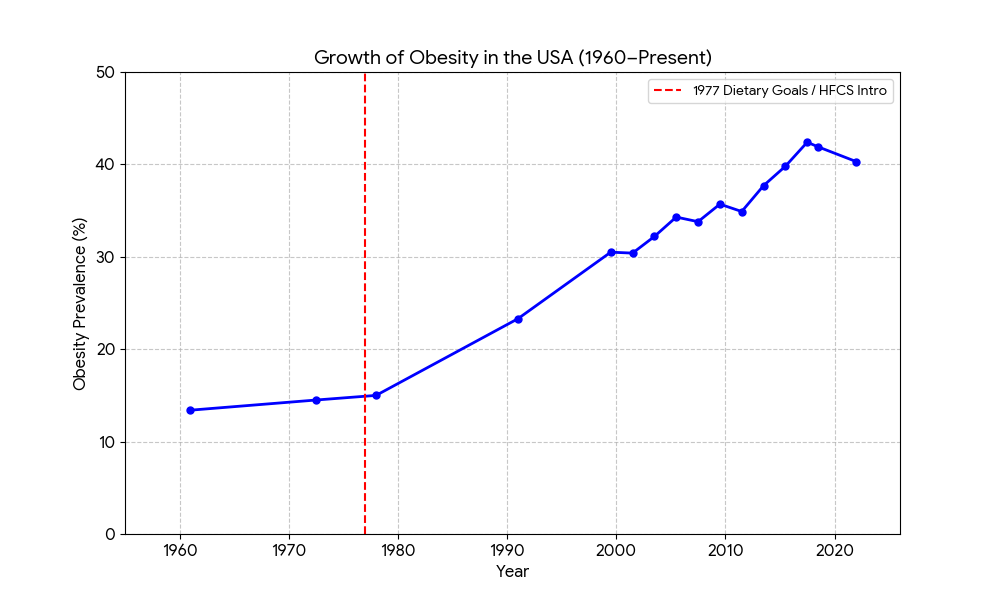
The national obesity rate in the United States was approximately 13–14% through the mid-1970s (CDC NHANES data). The rise began between 1976 and 1980, coinciding precisely with the low-fat mandate’s translation into the documented rise in UPF consumption tracked in NHANES surveys. The largest increases through the 1980s and 1990s were in sugar-sweetened beverages, salty snacks, refined grain products, and fast food. By 2022, the adult obesity rate had reached 41.9%.
If you enjoy evidence-based medical information, subscribe to receive these articles delivered to your mailbox every week.
What the Industry Knew
Ultra-processed food was not accidentally engineered to override appetite. The peer-reviewed evidence establishes that it was deliberately engineered using strategies directly imported from tobacco science.
Beginning in 1963, major tobacco companies began acquiring large segments of the US food industry. R.J. Reynolds and Philip Morris eventually owned brands including Del Monte, Nabisco, General Foods, Kraft, and 7UP. Peer-reviewed research published in Obesity in 2019 by Fazzino and colleagues, using the public tobacco industry archive, found that foods owned by tobacco companies between 1988 and 2001 were 29% more likely to be classified as fat-and-sodium hyperpalatable and 80% more likely to be classified as carbohydrate-and-sodium hyperpalatable than foods produced by non-tobacco-owned companies during the same period.
A 2026 review in the Milbank Quarterly, authored by researchers from Harvard, Duke, and the University of Michigan, concluded that ultra-processed foods are not simply natural products but highly engineered delivery systems designed specifically to maximize biological and psychological reinforcement and habitual overuse, sharing key engineering strategies with the tobacco industry including dose optimization and hedonic manipulation (Gearhardt, Brownell, and Brandt, 2026).
Industry trade publications in their own words described the goal as “turning consumer cravings into commercial wins” and acknowledged that “for decades, indulgence has been the profit engine.”
With US, UK, and EU markets saturated, the industry pushed into South America, Africa, Eastern Europe, China, and India. According to the November 2025 Lancet Series on Ultra-Processed Foods, authored by 43 international experts, UPF consumption has doubled in Brazil, Canada, and Mexico and tripled in China, South Korea, and Spain within a period of a few years. More than 50% of the $2.9 trillion distributed to food corporation shareholders between 1962 and 2021 was paid out by UPF manufacturers alone.
What Processing Does to Food
Before examining what ultra-processed food does to your body is worth examining what industrial processing does to food itself.
Food matrix destruction. Whole food has physical structure: fiber networks, cell walls, the spatial arrangement of macronutrients within intact cellular architecture. That structure governs digestion rate, glucose release kinetics, and the gut-brain satiety signaling that tells you when to stop eating. Industrial processing destroys it. The result is food that is digested faster, absorbed more rapidly, produces sharper glycemic excursions with corresponding insulin responses, and fails to engage the satiety mechanisms that intact food reliably triggers.
Refined fat, sugar, and salt at non-natural concentrations. The combinations of fat, sugar, and salt found in ultra-processed products are calibrated to maximize hedonic response and drive consumption beyond what your satiety system would otherwise permit. The reward pathway engagement produced by these combinations exceeds what any whole food can generate.
Industrial additives. Emulsifiers, artificial sweeteners, preservatives, colorants, and flavor enhancers serve industrial functions: shelf stability, texture restoration, appearance, and palatability amplification. They are not in your food to nourish you. Several additives have documented effects on gut microbiome composition and intestinal barrier integrity independent of their caloric content.
What Ultra-Processed Food Does to Your Body
Gut microbiome disruption. Ultra-processed food is deficient in dietary fiber, the primary substrate for beneficial gut bacteria, and rich in refined sugars, artificial sweeteners, and emulsifiers that directly alter microbial composition. Higher UPF consumption is associated with decreased microbial diversity, depletion of beneficial species including Akkermansia muciniphila and Faecalibacterium prausnitzii, increased pro-inflammatory microorganisms, elevated intestinal permeability, and systemic endotoxemia via lipopolysaccharide translocation, all of which propagate the chronic low-grade inflammation that sustains and advances insulin resistance (Zinöcker and Lindseth, 2018; Nutrients, 2025).
Disrupted appetite and satiety signaling. The Hall randomized controlled trial, published in Cell Metabolism in 2019, is the only inpatient RCT that has directly tested whether UPF drives overconsumption independently of nutrient content. Twenty adults were randomized to two-week periods of ultra-processed or unprocessed diets matched for presented calories, energy density, sugar, fat, fiber, and macronutrient composition. Ad libitum intake was approximately 500 kcal per day higher on the ultra-processed diet. Body weight changes tracked directly with caloric intake differences. The only variable that differed between conditions was the degree of processing. This is proof-of-concept evidence from a controlled experiment: small sample size (n=20), short duration (two weeks), primarily younger adults.
Addictive overconsumption. Hyperpalatable ultra-processed food engages the brain’s reward system in ways that structurally parallel addictive substances: rapid delivery of reinforcing stimuli, short-lived reward driving repeated consumption, tolerance effects requiring increasing quantity to achieve the same hedonic response. The published addiction science literature now explicitly frames UPF as addictive.
Displacement. Approximately 70% of packaged food on US grocery shelves is ultra-processed. Americans overall derive 55% of their daily calories from UPF. Children derive 61.9%, with children aged 6–11 at 64.8% the highest intake of any age group (CDC Data Brief No. 536, August 2025, NHANES 2021–2023). The fiber, phytonutrients, intact food matrix, and prebiotic substrates of whole food are simply absent from the diet.
The epidemiological evidence. A systematic review and meta-analysis of 207,291 participants across seven prospective cohort studies found UPF consumption associated with a 21% increased risk of all-cause mortality, a 50% increased risk of cardiovascular disease mortality, and a 66% increased risk of heart disease mortality. Separate meta-analyses found UPF consumption associated with a 15–53% higher risk of developing type 2 diabetes and a significantly elevated risk of metabolic syndrome across cross-sectional and cohort study designs. All large-scale outcome evidence is strictly observational.
Your First Step Out
The rest of this series will address dietary patterns in detail. For now, three simple substitutions to start with today.
Instant mashed potatoes, replaced by potatoes. The food matrix remains intact, industrial starch, flavoring agents, emulsifiers, and sodium phosphates in the packet are gone.
Instant oatmeal, replaced by old-fashioned or steel-cut oats. Instant oats are pre-cooked and rolled thin to accelerate cooking and digestion. Steel-cut oats require 20 minutes; old-fashioned rolled oats require five. Add your favorite natural flavoring yourself.
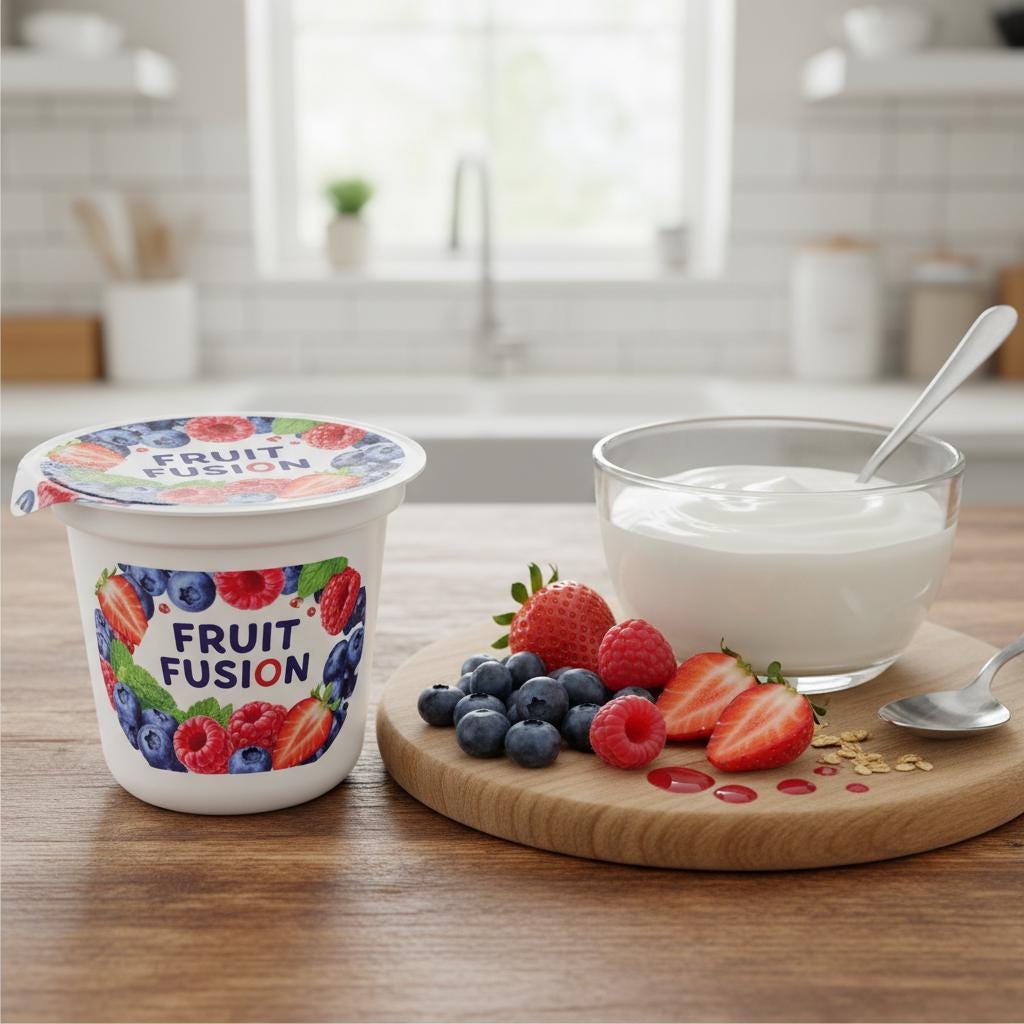
Flavored fruit yogurt, replaced by plain Greek yogurt with fresh or frozen fruit. A standard flavored yogurt contains 12–20 grams of added sugar per serving. Plain Greek yogurt contains none, and the fruit you add provides the food matrix that the fruit puree concentrate in the cup has already destroyed.
These substitutions are meant as illustrative examples of how you can start moving away from UPF. Each one reduces your daily UPF exposure, preserves food matrix, and consume food your biology was originally built to process.
That is how lifestyle modification works: not a complete overhaul in one day, instead one substitution at a time, sustained over months and years.
On future articles in the series we visit diet modification in detail, for now cutting back on ultra-processed foods is the first strategy you can start implementing today.
Found this article useful? Share your thoughts. Join the conversation below.
Educational content on The Metabolic Archives is free, because medical information should be accessible to everyone. If you find value and want to support the work, a paid subscription is available and genuinely appreciated. Visit the About Page for additional information.
The Metabolic Archives is for educational and informational purposes only, and is not intended as medical advice, diagnosis, or treatment, and does not constitute a doctor-patient relationship. Do not adopt any recommendation discussed in any article or guides published here, make changes or abandon any prescribed medical treatment without prior consultation with your physician. Always seek the advice of your physician or other qualified health provider for any questions regarding your medical condition and recommended treatment options.
By reading this post, you acknowledge that you have read and agree to the Terms of Service of The Metabolic Archives, which govern all use of this content including restrictions on reproduction.
© 2026 The Metabolic Archives. All rights reserved.
This essay is a very helpful, succinct review of how we have gotten to the place. We are as far as nutrition and heart disease. As far as Ultra processed foods are concerned… If it doesn’t look like food, it’s not food! I truly don’t believe the exact diet (Mediterranean, vegan, carnivore) matter as much as eating, locally sourced, nutrient dense foods. Grass fed and grass finished beef and pork, true pasture, raised chickens, eggs from the same source, and local fruits and vegetables which have minimal pesticide interventions.
Thank you for this excellent summary!
I would like you to research and tell us what the additives are chemically and the researched evidence that they cause harm. Every expert just plies the term Ultra Processed Foods. Look at the photograph I’d the supermarket shelves you have shown. From the hundreds of nice coloured bags in the shelves of different snacks, you can just list out 5 or 6 coded additives which are emulsifiers, anti oxidants etc. And the listing will tell you what are they chemically. Like for example glycerol mono stearate ( GMS). And please enlighten us with available information and evidence what are known metabolic downside with that additive and some evidence anecdotes. All we get is motherhood warning statements that they are bad for health. All said and done, 99.5 % by weight of the snack inside is made up of flour, salt, oil, spices which you use everyday as the base for your cooking. They cannot be the culprits.