
Lifestyle Modification: The Most Powerful Treatment You Were Never Taught
Part Nine: Understanding the Building Blocks of a Metabolically Healthy Diet

Most people eat without understanding what they are eating or why it matters for their own biology. The result is a diet shaped by habit, marketing, and convenience rather than by any coherent understanding of what food actually does. That is an information gap this piece aims to closes.
What follows is a category-by-category reference covering every major food group that belongs in a metabolically healthy diet. This is the dietary education that should have been available to you decades ago. It is yours now. Part Nine will show you how to assemble these building blocks into a personalized, sustainable dietary plan.
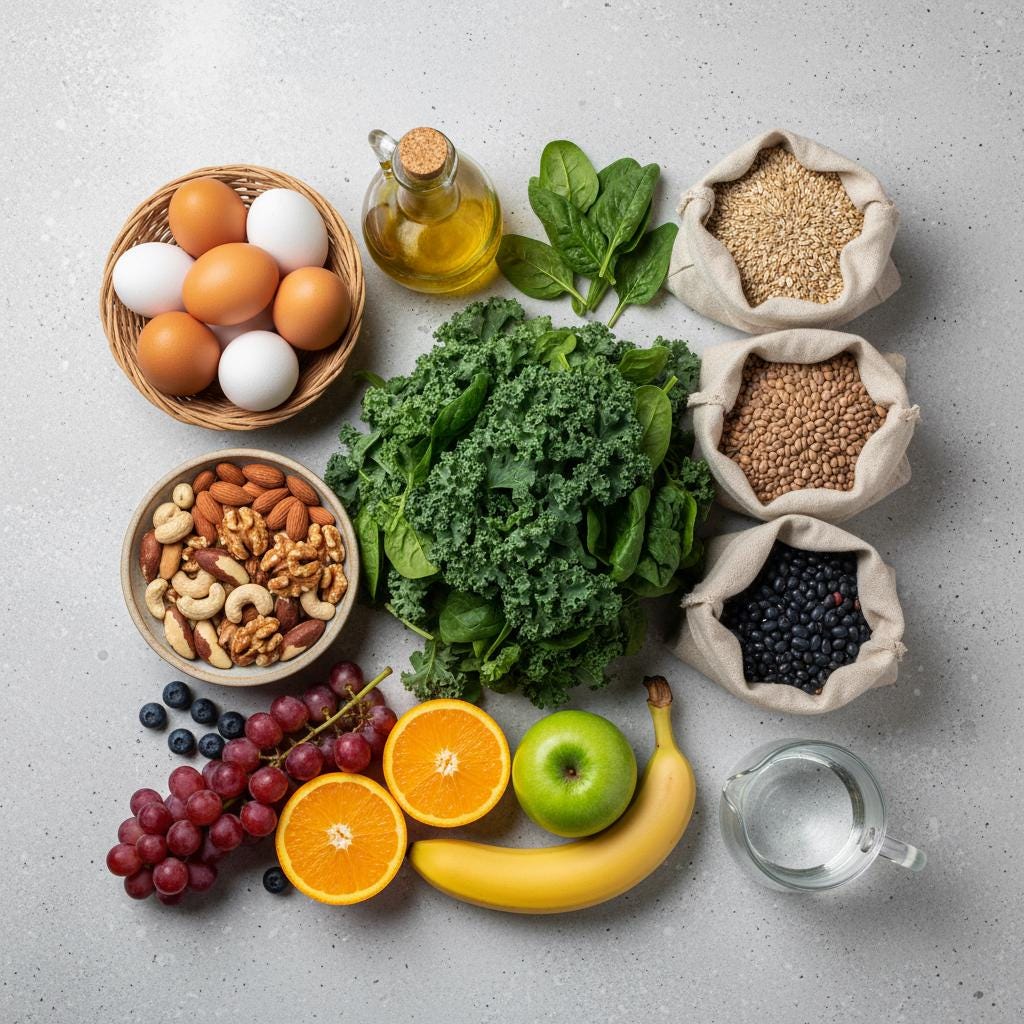
Protein, You Cannot Afford to Ignore It
Protein is the only macronutrient the body cannot store, what is not used for structural repair, enzyme synthesis, immune function, and hormone production is either oxidized for energy or converted to glucose or fat. This means protein must be consumed consistently, at adequate amounts, every day.
The federal recommended dietary allowance (RDA) of 0.8 grams per kilogram of body weight per day has anchored dietary guidance for decades. That figure represents the minimum required to prevent deficiency in sedentary healthy adults, not an optimal intake for metabolic health, lean mass preservation, or satiety. A March 2026 Stanford Medicine commentary confirmed that newly revised dietary guidelines now recommend 1.2 to 1.6 grams per kilogram per day for general adults, reflecting a growing consensus that the 0.8g/kg figure represents a survival floor, not a target (Stanford Medicine News, 2026).
Requirements differ further by population. The PROT-AGE Study Group, an international consortium convened by the European Union Geriatric Medicine Society, recommends 1.0 to 1.2 grams per kilogram per day for healthy adults over 65, rising to 1.2 to 1.5 grams per kilogram per day for older adults managing acute or chronic disease, and up to 1.6 grams per kilogram per day for those with sarcopenia, with emphasis on distributing intake across multiple daily meals to maximally stimulate muscle protein synthesis (Bauer et al., JAMDA, 2013; Landi et al., J Gerontol A, 2023).
If you carry excess weight, these calculations should use your target body weight, not your current weight. If you have significant chronic kidney disease (CKD), protein targets require individualized physician guidance and are beyond the scope of this article.
Protein also has the highest thermic effect of any macronutrient: approximately 20 to 30 percent of its caloric value is expended in digestion and processing. This means protein delivers fewer net calories per gram than the label suggests, while simultaneously producing the most sustained satiety response per calorie of any macronutrient.
Practical protein sources: Eggs, poultry, fish and shellfish, lean red meat, Greek yogurt, cottage cheese, legumes (lentils, chickpeas, black beans), tofu and tempeh, edamame, and dairy. Variety across these sources ensures complementary amino acid profiles and avoids the micronutrient gaps that come with excessive reliance on any single source.
A Word On Eggs
A 2025 umbrella review in Nutrition, Metabolism and Cardiovascular Diseases concluded that the longtime restriction on egg consumption has been progressively mitigated as higher-quality studies have consistently failed to demonstrate strong cardiovascular outcome associations (Carter et al., 2025). A systematic review of 23 randomized controlled trials (RCTs) found nonsignificant effects of increasing egg consumption on cardiovascular disease risk markers. The 2015 to 2020 US Dietary Guidelines removed the previous 300mg per day dietary cholesterol restriction entirely. A 2025 RCT in the American Journal of Clinical Nutrition confirmed that saturated fat has a greater independent impact on low-density lipoprotein (LDL) cholesterol than dietary cholesterol from eggs: eggs contain minimal saturated fat per egg, making them nutritionally distinct from other high-cholesterol foods (AJCN, 2025).
Current evidence supports up to one egg per day as safe for the general healthy population. Evidence above that threshold is limited and heterogeneous: a reasonable position is that moderate consumption beyond one per day is not associated with clear harm in most populations, but the evidence is sparse here. One egg per day is the well-supported recommendation.
Fats, Quality Over Quantity
The dietary position that fat intake drives cardiovascular disease dominated nutrition policy for four decades. It was not entirely wrong but was incomplete, and the incompleteness caused real harm.
The De Novo Lipogenesis Correction
The liver synthesizes 70 to 80 percent of circulating cholesterol endogenously from acetyl-CoA, a substrate derived primarily from excess carbohydrate metabolism and caloric overconsumption, not from dietary fat intake (Endotext, NIH Bookshelf, 2026). This process is called de novo lipogenesis (DNL), one of the most important and least understood pieces of metabolic biology.
When you consume more carbohydrates than your body can use for immediate energy or glycogen storage, the liver converts the surplus to fat. High-carbohydrate diets raise serum triglycerides by 30 to 40 percent through carbohydrate-induced hypertriglyceridemia, an effect observable within five days of high carbohydrate intake (JCI, 1999).
The practical implication: reducing caloric overconsumption and excess refined carbohydrate intake is a more powerful and direct target for dyslipidemia management than dietary fat restriction alone.
Saturated Fat, The Exception
Saturated fat is a genuine independent contributor to LDL elevation and should be moderated. The evidence for this is solid. The error was not in implicating saturated fat, it was ignoring the carbohydrate-driven pathway that accounts for most of the liver’s cholesterol and triglyceride output.
Extra-Virgin Olive Oil: The Evidence-Based Standard
Extra-virgin olive oil (EVOO) is produced through mechanical cold pressing without chemical treatment, preserving its full complement of bioactive phenolics alongside approximately 75 percent oleic acid content. These compounds provide anti-inflammatory, antioxidant, insulin-sensitizing, cardioprotective, and antiatherogenic activity that refined olive oils cannot replicate. Refined olive oil and olive oil blends undergo processing that destroys polyphenol content. Only extra-virgin olive oil delivers the full benefits.
The PREDIMED trial of 7,477 high cardiovascular risk individuals found that a Mediterranean diet supplemented with EVOO produced significantly lower incidence of major cardiovascular events including stroke, myocardial infarction, and cardiovascular mortality compared to a reduced-fat control diet (JACC, 2020). A large US prospective cohort study found that replacing other types of fat with olive oil was associated with lower risk of total cardiovascular disease and coronary heart disease.
Use EVOO for cooking and as a finishing oil on vegetables, salads, and grains. The evidence for its benefit is among the strongest in the dietary literature.

Vegetables and Fruits, The Foundation
No dietary pattern with a strong evidence base omits vegetables and fruits. There is no credible metabolic health argument for reducing them.
A 2024 study in Nutrients found that daily intake of two or more servings of vegetables is associated with lower prevalence of metabolic syndrome in older adults (Cubas-Basterrechea et al.). Systematic reviews confirm the role of vegetables, fruits, and berries in reducing risk of cardiovascular disease, gastric and lung cancer, and all-cause mortality with evidence graded as strong for these specific outcomes (Food and Nutrition Research, 2024; Critical Reviews in Food Science and Nutrition, 2019).
Flavonoids, particularly anthocyanins found in berries, red and purple produce, are associated with reduced cardiovascular disease risk, reduced all-cause mortality, and direct effects on glucose metabolism and LDL cholesterol in RCT data. Carotenoids provide anti-inflammatory and antioxidant effects independent of their pro-vitamin A activity. Fiber and polyphenols slow gastric emptying, blunt postprandial glucose excursions, and feed the gut microbiome.
One practical point worth emphasizing: the peel of edible-skinned fruits and vegetables contains substantially more fiber and polyphenol content than the flesh beneath it. Apple peel provides approximately twice the fiber content of peeled apple per equivalent weight. Eat the peel wherever it is practical and safe to do so. Wash produce thoroughly, for thin-skinned, high-pesticide-residue fruits and vegetables choosing organic is a reasonable consideration.
Aim for variety across colors. Different pigments reflect different phytochemical families. A plate that looks the same every day is a plate that delivers the same narrow subset of the available benefit.
Starches and Grains Are Energy, Not Enemies
Carbohydrates became dietary villains by association with sugar and refined grains, which leads people to eliminate legitimate whole food sources of energy.
Starches and whole grains are important dietary energy sources. Their metabolic impact depends almost entirely on the degree of processing and preparation. Whole grains retain the fiber, vitamins, minerals, and phytochemicals stripped during refinement. A 2-serving-per-day increment in whole grain consumption is associated with a 21 percent reduction in type 2 diabetes risk in epidemiological data, a magnitude consistent across multiple large cohort studies (StatPearls, 2025).
The real bread versus industrial bread distinction is the clearest illustration of this principle. Real bread, a baguette or sourdough crusty bread, is a minimally processed whole food. Industrial sandwich bread is an ultraprocessed food (UPF) product: it contains emulsifiers, dough conditioners, preservatives, added sugars, and industrial fats that categorically separate it from its whole food counterpart.
Cooking and cooling starchy foods converts a portion of digestible starch to resistant starch, which behaves metabolically more like fiber: it resists digestion in the small intestine, reaches the colon intact, and serves as a prebiotic substrate. The full discussion of this mechanism and how to apply it practically is covered in the dietary hacks article published separately in this series.
Practical whole grain and starch sources: Oats, barley, quinoa, brown and wild rice, whole grain pasta, farro, buckwheat, whole grain bread made from whole flour, potatoes and sweet potatoes with skin, legumes.
Nuts, A Handful That Earns Its Place
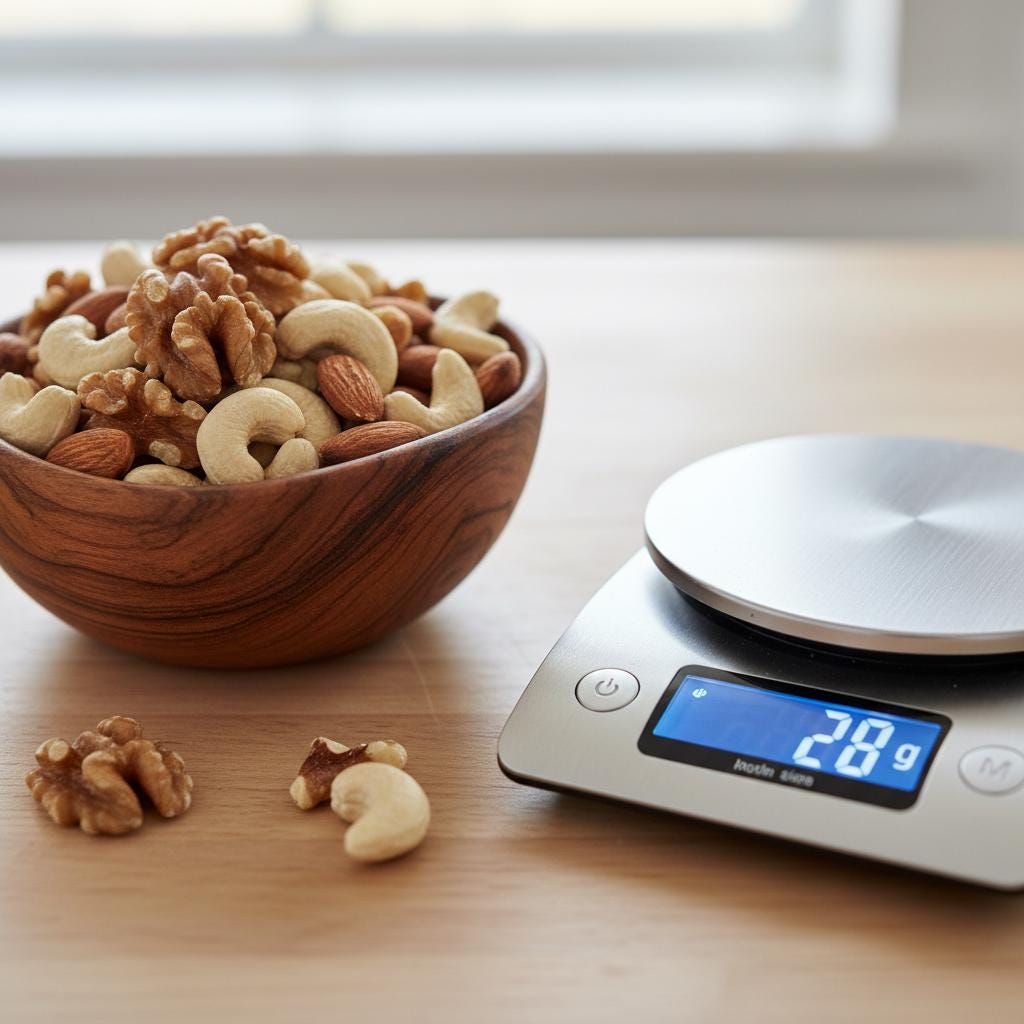
The evidence for daily nut consumption is among the most consistent and robust in the dietary literature. An umbrella review of 89 articles found that 28 grams per day of nuts, approximately one small closed handful, compared with eating no nuts was associated with a 21 percent reduction in cardiovascular disease risk, a 22 percent reduction in all-cause mortality, and an 11 percent reduction in cancer mortality (Balakrishna et al., Adv Nutr, 2022). The PREDIMED trial confirmed cardiovascular protection from daily nut consumption equivalent in magnitude to the EVOO supplementation arm compared to the low-fat control.
Walnuts and almonds have the strongest individual evidence bases. Walnuts carry a European Union-approved health claim for improvement of endothelium-dependent vasodilation, supported by their polyunsaturated fatty acid and plant-based omega-3 fatty acid content. Almonds dose-dependently reduce LDL cholesterol through their monounsaturated fat, phytosterol, fiber, and vitamin E content, and improve fasting and postprandial glucose and insulin resistance markers (J Am Heart Assoc, 2015). A 2025 RCT in adults with metabolic syndrome found that whole dry-roasted almonds consumed as snacks produced beneficial changes in total cholesterol, LDL, intestinal inflammation biomarkers, and vitamin E status (ScienceDirect, 2025). The US Food and Drug Administration (FDA) has issued a qualified health claim for nut consumption and reduced coronary artery disease risk.
The 28-gram portion is the evidence-supported quantity. The evidence applies to plain, raw, or dry-roasted nuts with minimal salt. Honey-roasted, flavored, and commercially seasoned nut products are UPF products, the metabolic benefit documented in the literature does not extend to them.
If you enjoy evidence-based medical information, subscribe to receive these articles delivered to your mailbox every week.
Fiber, The Missing Dietary Link
Only 5 percent of Americans meet the fiber recommended dietary allowance. The World Health Organization (WHO) recommends 25 to 30 grams per day. The average American consumes approximately 15 grams (StatPearls, 2025; Front Nutr, 2024).
Fiber has documented roles in postprandial glucose regulation, LDL cholesterol reduction, gut microbiome support, satiety, and long-term diabetes and cardiovascular disease risk reduction. Chronic fiber deficiency is a chronic metabolic liability.
Fiber exists in two forms with distinct mechanisms.
Soluble fiber: beta-glucan in oats and barley, pectin in apples and citrus fruits, forms a viscous gel in the gut that slows gastric emptying, blunts postprandial glucose excursions, and binds bile acids in the small intestine. Bile acid binding forces the liver to synthesize new bile acids from circulating cholesterol, lowering serum LDL. Soluble fiber also serves as a prebiotic substrate: gut bacteria ferment it into short-chain fatty acids (SCFAs) including butyrate, which reduce colonic inflammation and support the intestinal barrier.
Insoluble fiber: cellulose, lignin, and hemicellulose in whole grains and vegetables, does not dissolve and produces the strongest long-term diabetes risk reduction in epidemiological data. The 21 percent reduction in diabetes risk per 2-serving-per-day increment in whole grain consumption cited in the grains section is driven substantially by this insoluble fiber content.
Consolidated fiber sources across food categories:
Soluble: oats, barley, apples, pears, citrus fruits, legumes (lentils, chickpeas, black beans), psyllium husk, flaxseed
Insoluble: whole wheat products, brown rice, quinoa, vegetables (broccoli, carrots, leafy greens), nuts and seeds, potato and fruit skins
One important instruction: increase fiber intake gradually. Rapid increases can cause gastrointestinal discomfort, bloating, gas, cramping, entirely avoidable with a measured approach. Add one to two servings of high-fiber food per week and increase water intake concurrently, increase gradually as tolerated.
Sugars, Different Sources
Table sugar (sucrose) at moderate intake is not an independent cause of metabolic disease. The metabolic harm attributed to sugar derives overwhelmingly from the quantities in which it appears in UPF and sugar-sweetened beverages, not from a teaspoon in coffee or modest use in home cooking. The WHO recommendation is to keep free sugars below 10 percent of total daily caloric intake, with additional benefit observed below 5 percent (WHO, 2015). A moderate quantity of table sugar used thoughtfully in the context of an otherwise whole-food diet is not what is driving the metabolic disease epidemic.
Brown sugar and raw sugar: are compositionally 88 to 97 percent sucrose. They offer no meaningful nutritional or metabolic advantage over white sugar at equivalent quantities, despite their premium price and implicit health positioning. While the difference in processing is real, the difference in metabolic impact at the quantities used is negligible.
The natural sweetener: Agave nectar marketed as a low-glycemic natural alternative to sugar, contains 70 percent or more fructose, higher than high-fructose corn syrup. Its low glycemic index (GI) reflects the fact that fructose does not acutely raise blood glucose the way glucose does. Fructose drives hepatic DNL directly raising triglycerides, promoting insulin resistance, and contributing to non-alcoholic fatty liver disease (NAFLD). Agave is potentially the worst available sweetener choice, despite its health marketing.
Honey: contains approximately 40 percent fructose, 30 percent glucose, and 20 percent water alongside approximately 181 bioactive compounds including polyphenols. Some controlled trials suggest modestly smaller postprandial glucose excursions and marginal lipid benefits for raw unprocessed varieties. Honey remains predominantly sugar and should be consumed in equivalent moderation. The marginal benefit is real but modest.
Real maple syrup: is 97 percent sucrose equivalent to table sugar. It is also a single-ingredient minimally processed whole food, and it is categorically superior to artificial pancake syrup, which is a UPF product containing high-fructose corn syrup, caramel color, artificial flavors, and preservatives, despite similar caloric content per serving.
Artificial sweeteners are addressed in the Diet Soda article published separately in this series.
High Potassium Foods
Potassium is one of the most recommended dietary targets in international cardiovascular and metabolic guidelines, and one of the most consistently underconsumed minerals in the Western diet. Most Western populations currently consume approximately twice as much sodium as potassium. The WHO recommends reversing that ratio: less than 2,300mg of sodium per day and at least 3,500mg of potassium per day (WHO Guideline).
Potassium reduces blood pressure through renal mechanisms, modulating sodium reabsorption in the distal tubule and promoting sodium excretion. A 2025 dose-response meta-analysis of RCTs confirmed a significant dose-dependent relationship between increased potassium intake and blood pressure reduction, particularly meaningful in established hypertension (Clin Kidney J, 2025). Potassium intake between 3,000 and 5,000mg per day is associated with slowed development of type 2 diabetes and favorable effects on insulin sensitivity in observational data.
The practical good news: a diet naturally rich in vegetables, fruits, and legumes is automatically a high-potassium diet.
High potassium food sources:
Vegetables: spinach, Swiss chard, kale, beet greens, sweet potato, potato with skin, winter squash, tomatoes, broccoli, Brussels sprouts, avocado
Fruits: banana, orange, cantaloupe, honeydew, dried apricots, prunes, pomegranate
Legumes: lentils, black beans, kidney beans, edamame, white beans
Other: salmon, plain yogurt, whole milk, nuts and seeds
Mandatory caveat: Patients with significant chronic kidney disease cannot adequately excrete potassium and face serious hyperkalemia risk with unrestricted high-potassium intake. If you have CKD, potassium management requires individualized physician guidance. This section’s general targets do not apply to you.
High Vitamin K Foods
Vitamin K exists in two biologically distinct forms with different food sources, different functions, and different clinical considerations.
Vitamin K1 (phylloquinone) is found predominantly in green leafy vegetables and certain plant oils. It is the primary dietary form in most Western diets and is essential for hepatic synthesis of clotting factors II, VII, IX, and X. A single half-cup serving of cooked kale or spinach meets or exceeds the daily requirement of 90mcg for women and 120mcg for men entirely (NIH Office of Dietary Supplements, 2024). K1 bioavailability from plant sources is significantly lower than from plant oils and is meaningfully improved by consuming alongside dietary fat.
Vitamin K2 (menaquinones) is produced by bacteria, including gut microbiome bacteria, and is found in fermented foods as well as certain animal products including aged cheeses and egg yolks. K2’s role in bone health and vascular calcification prevention is an active and developing area of research beyond its coagulation function.
High vitamin K food sources:
K1: kale, spinach, collard greens, Swiss chard, beet greens, broccoli, Brussels sprouts, cabbage, lettuce, parsley, green onions, plant oils (soybean, canola)
K2: natto, aged hard cheeses (Gouda, Brie), egg yolks, chicken liver, fermented foods
For patients on warfarin: Warfarin works by competitive inhibition of vitamin K-dependent clotting factor synthesis. Stable daily vitamin K intake allows your warfarin dose to be calibrated and maintained accurately. If you plan to significantly increase your intake of green leafy vegetables, implement the change gradually and inform your physician so your international normalized ratio (INR) can be monitored appropriately during the transition.
Beverages
Water
Water is the only beverage the body requires. Pre-meal consumption of 500ml is associated with reduced food intake at the subsequent meal across multiple RCTs, through gastric volume contribution to early satiety; a modest effect with zero cost and zero risk.
Tea
Unsweetened naturally brewed tea provides polyphenols including epigallocatechin gallate (EGCG) with documented antioxidant, anti-inflammatory, and metabolic benefits in large prospective cohort studies. Regular green tea consumption is associated with improved insulin sensitivity, modest LDL reduction, and reduced cardiovascular risk. Commercially bottled teas are predominantly sugar-sweetened beverages and are not the product the evidence supports.
Coffee
Moderate consumption of one to three cups per day is associated with reduced risk of type 2 diabetes, metabolic syndrome, and all-cause mortality across multiple large meta-analyses (Ding et al., Diabetes Care, 2014). The benefit derives from chlorogenic acids and polyphenols. Decaffeinated coffee shows similar metabolic associations, confirming that caffeine is not the active component.
The problem is what most people put into it. Sugar, flavored syrups, and high-calorie creamers transform a metabolically beneficial beverage into a dessert. Black coffee, or coffee with a small amount of whole milk, is the evidence-supported version.
Smoothies and Fruit Juice
A homemade whole fruit smoothie retains the complete fiber content of intact fruit. Blending disrupts the physical food matrix structure but does not destroy fiber. The glycemic response to a whole fruit smoothie is significantly more favorable than equivalent fruit juice, where fiber has been removed. Commercial smoothies are typically made with fruit juice rather than whole fruit, contain added sugars and other industrial ingredients, and are metabolically equivalent to sugar-sweetened beverages despite the health marketing on their labels.
Fruit juice removes the structural fiber matrix regardless of pulp addition. Pulp adds approximately 0.5 grams of fiber per cup compared to 3 to 4 grams in equivalent whole fruit. The result is a significantly faster postprandial glucose excursion than whole fruit produces.

The Complete Dietary Toolkit
The pattern that emerges across all twelve categories is consistent. Whole, minimally processed foods deliver their nutrients in a biological context that refined and ultraprocessed products cannot replicate.
Part Nine will show you how to assemble these components into a personalized, sustainable dietary plan using the proven principles of Mediterranean, DASH, and Volumetric eating applied to foods you already know, understand, and can access.
Found this article useful? Share your thoughts. Join the conversation below.
Educational content on The Metabolic Archives is free, because medical information should be accessible to everyone. If you find value and want to support the work, a paid subscription is available and genuinely appreciated. Visit the About Page for additional information.
The Metabolic Archives is for educational and informational purposes only, and is not intended as medical advice, diagnosis, or treatment, and does not constitute a doctor-patient relationship. Do not adopt any recommendation discussed in any article or guides published here, make changes or abandon any prescribed medical treatment without prior consultation with your physician. Always seek the advice of your physician or other qualified health provider for any questions regarding your medical condition and recommended treatment options.
By reading this post, you acknowledge that you have read and agree to the Terms of Service of The Metabolic Archives, which govern all use of this content including restrictions on reproduction.
© 2026 The Metabolic Archives. All rights reserved.