
Lifestyle Modification: The Most Powerful Treatment You Were Never Taught
Part Six: Taking Back Control: Understanding and Managing Chronic Stress

Your body’s stress response is a sophisticated survival mechanism; when you perceive a threat within seconds you are physiologically equipped to fight or flee. The problem is not the stress response is the environment it now operates in. Although threats are no longer time-limited, it responds with the same cortisol cascade regardless.
The metabolic consequences of that mismatch are directly relevant to your health.
Two Systems, One Cascade
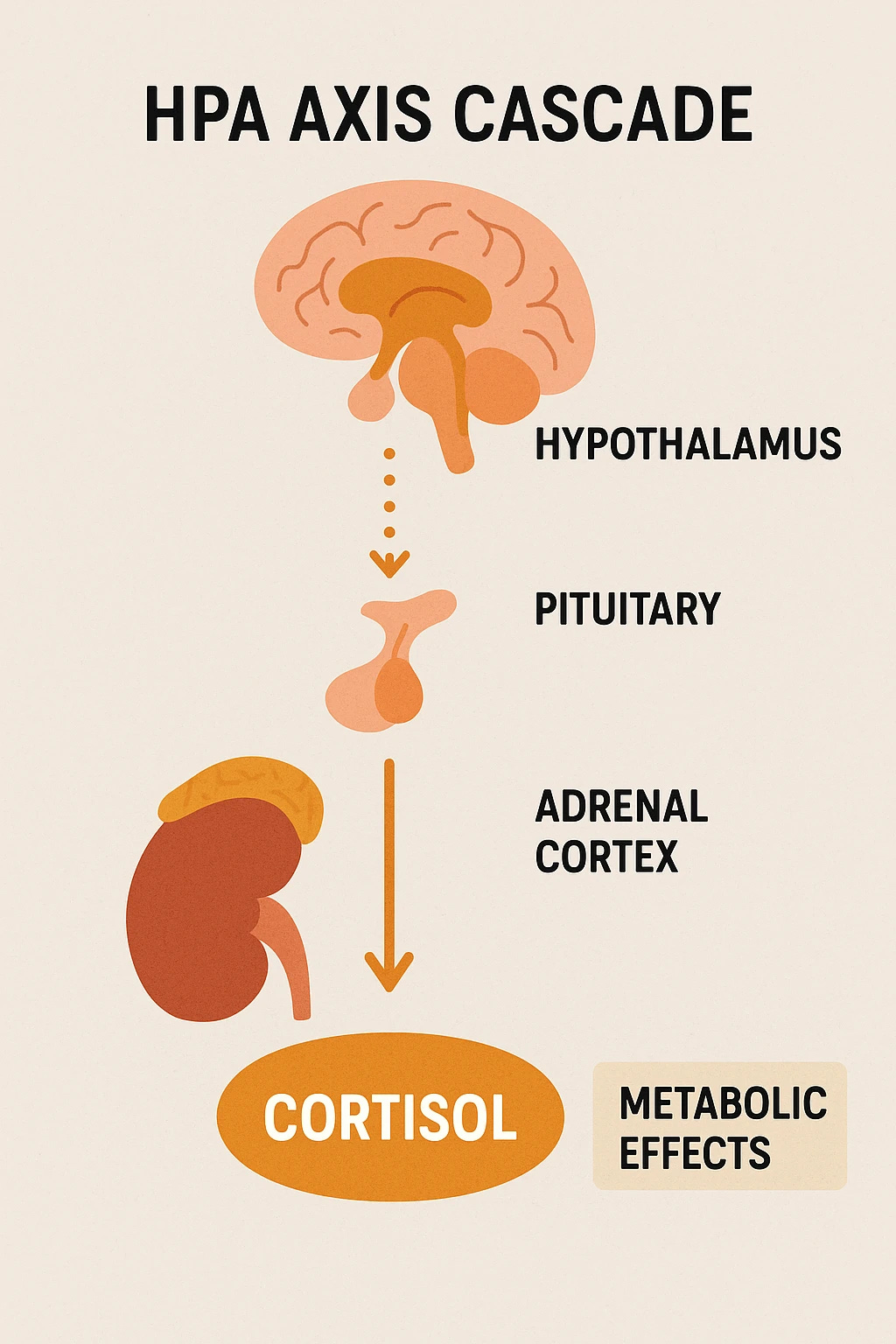
The first is the sympathetic-adrenomedullary (SAM) axis, which is fast. Within seconds of perceiving a threat, it releases epinephrine and norepinephrine from the adrenal medulla, producing the classic fight-or-flight response: elevated heart rate, dilated pupils, mobilized glucose, heightened alertness. This response peaks quickly and, under normal circumstances, resolves quickly.
The second is the hypothalamus-pituitary-adrenal (HPA) axis, which is slower but more consequential. Threat perception triggers the hypothalamus to release corticotropin-releasing hormone (CRH), which signals the pituitary to release adrenocorticotropic hormone (ACTH), which drives the adrenal cortex to produce cortisol. This cascade takes minutes but produces effects that last hours. Cortisol is the molecule that keeps the biological alarm running after the initial burst, sustaining the metabolic mobilization until the threat passes and the system returns to baseline.
In acute stress cortisol mobilizes glucose, suppresses non-essential functions like digestion and reproduction, and keeps you alert and responsive. When the threat resolves, cortisol drops, the inhibitory feedback loop kicks in, and the system resets.
Chronic stress prevents that reset. According to a 2023 narrative review in Frontiers in Endocrinology, the nervous system recalibrates around sustained activation, and the biological motor keeps running at a level it was never designed to sustain indefinitely.
The Cumulative Price of Never Coming Down
Allostatic load is the term introduced by McEwen and Stellar in their landmark 1993 paper in Archives of Internal Medicine to describe the cumulative biological wear produced by repeated or prolonged stress responses that never fully resolve. It is a measurable composite score incorporating neuroendocrine, immune, metabolic, and cardiovascular biomarkers, and it predicts morbidity and mortality better than any single biomarker tested in isolation (Juster, McEwen, and Lupien, Neuroscience and Biobehavioral Reviews, 2010).
A 2025 analysis of 205,504 adults from the UK Biobank found that individuals with the highest allostatic load scores carried more than double the cardiovascular disease risk of those with the lowest scores. Allostatic load is produced by the interaction between chronic HPA activation and the behavioral patterns that chronic stress drives. Each of these behaviors amplifies the biological cost of the others.
What Is Actually Causing Your Chronic Stress
Work stress and burnout. Occupational stress is the most prevalent chronic psychosocial stressor in the adult population. Chronic job stress is associated with approximately 120,000 deaths per year in the United States, primarily through cardiovascular disease (Wellhub 2025 Workplace Stress Report). In 2025, 85% of workers reported burnout or exhaustion. The World Health Organization formally recognizes burnout as an occupational phenomenon. A 2025 systematic review confirmed associations between job strain, long working hours, shift work, and cardiometabolic risk factors including hypertension, impaired glucose metabolism, and obesity. Burnout independently predicts hypercholesterolemia, type 2 diabetes, and coronary heart disease.
Relationship and family stress. Interpersonal conflict, marital discord, family dysfunction, and caregiver burden all activate the HPA axis through the same threat appraisal pathway. Human social bonding is neurobiologically linked to safety, which means that disruption of close relationships registers as a genuine biological threat. A 2025 review in the American Journal of Medicine confirmed interpersonal psychological stress as a primary contributor to chronic HPA dysregulation. For the many adults in the 30 to 70 age range simultaneously managing aging parents and dependent children, caregiver stress represents a chronic stressor that rarely resolves on a defined timeline.
Financial stress. Voluntary overconsumption driven by social comparison and lifestyle inflation, particularly as amplified by influencer culture, is a modifiable stressor with behavioral solutions. Genuine financial distress from inability to meet basic necessities is a problem where individual behavioral intervention has limited reach. Both activate the same cortisol cascade.

Social isolation and loneliness. The absence of social connection functions as a chronic biological stressor. A 2025 review in the journal Stress confirmed that loneliness activates the HPA axis and sympathetic nervous system, producing sustained cortisol and catecholamine elevation, glucocorticoid resistance, and metabolic dysregulation. Studies consistently find higher cortisol awakening responses and flattened diurnal cortisol rhythms in lonely individuals. The US Surgeon General declared loneliness a public health epidemic in 2023, with the WHO estimating that approximately one in three older adults in the United States experiences it.
Online social interaction does not produce the neuroendocrine attenuation that in-person contact provides. Digital connection activates the social cognition network without delivering the oxytocin release and parasympathetic regulation that physical presence generates.
Social media and news consumption. A 2025 nationally representative study of 1,512 US adults aged 30 to 70 found both the time and frequency of social media use independently and linearly associated with loneliness. More directly, a controlled study demonstrated that social media use immediately following an acute stressor impaired cortisol recovery, sustaining elevated salivary cortisol compared to controls. Social media does not necessarily spike cortisol in the moment, it prevents the HPA axis from returning to baseline after stress activation.
Chronic news consumption: repeated exposure to conflict, disaster, and unresolved uncertainty maintains a sustained threat appraisal state. A 2023 study in Health Psychology confirmed that problematic news consumption was independently associated with stress, anxiety, and impaired functioning in a US adult sample.
What Chronic Stress Is Doing to Your Metabolism
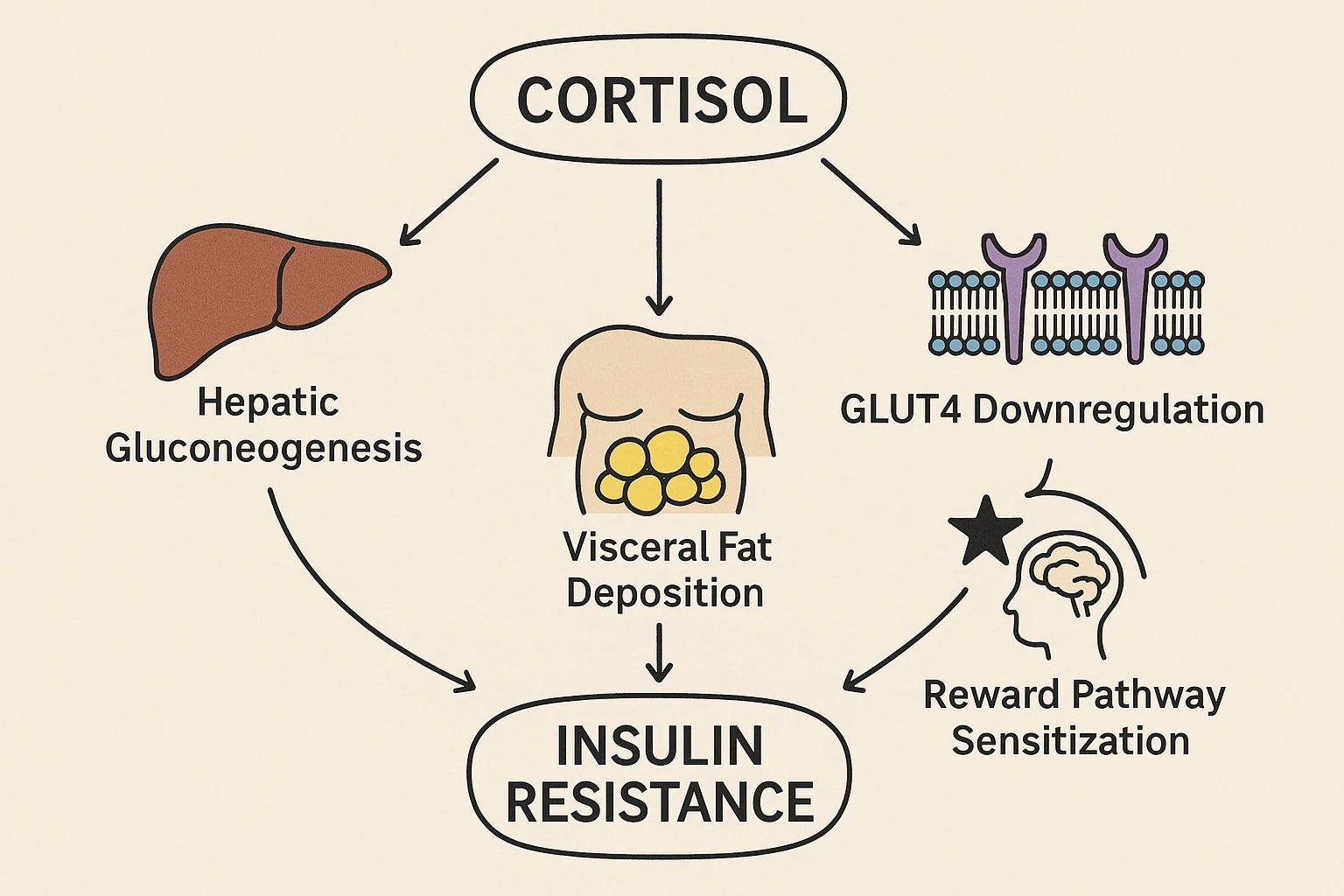
Insulin resistance. Chronic cortisol elevation stimulates hepatic gluconeogenesis while simultaneously reducing peripheral insulin sensitivity. A study in a Chinese population directly measured chronic stress scores against homeostatic model assessment of insulin resistance (HOMA-IR) and found a statistically significant independent association. One randomized controlled trial found that controlling for cortisol and testosterone eliminated 50% of stress-induced insulin resistance, directly implicating cortisol as a primary mechanism rather than a byproduct of the same underlying state.
The stress-diet interaction. Chronically stressed individuals show increased consumption of hyperpalatable, energy-dense foods through cortisol-driven reward pathway sensitization. The combination of chronic stress and a high-fat, high-sugar diet produces greater visceral adiposity than either factor alone, documented in a human case-control study.
Visceral fat. Cortisol preferentially drives fat deposition to visceral compartments rather than subcutaneous depots. Visceral adipose tissue is pro-inflammatory, metabolically active in harmful ways, and directly associated with insulin resistance, dyslipidemia, and cardiovascular disease in ways that subcutaneous fat is not. A 2025 comprehensive review in Clinical Obesity confirmed chronic cortisol exposure as a driver of obesity through visceral fat accumulation. The Yale Epel study demonstrated excess abdominal fat in non-overweight women with high stress reactivity, linking stress biology to visceral adiposity independent of overall body weight.
If you enjoy evidence-based medical information, subscribe to receive these articles delivered to your mailbox every week.
Cardiovascular disease. A 2025 review confirmed a cascade involving neuroendocrine, immune, and inflammatory systems leading to endothelial damage, atherosclerosis progression, and microvascular dysfunction in chronically stressed individuals. A 2024 narrative review in Heart and Mind confirmed cortisol-driven tumor necrosis factor-alpha (TNF-alpha) secretion produces endothelial dysfunction and plaque progression with increasing effect as stress duration extends. For postmenopausal women specifically, the estrogen-mediated endothelial protection that blunted this pathway during reproductive years is no longer present, making older women with chronic stress exposure particularly vulnerable to stress-mediated cardiovascular disease.
Systemic inflammation. Chronic HPA activation produces glucocorticoid receptor resistance over time. The anti-inflammatory signaling function of cortisol, one of its primary physiological roles, becomes less effective as receptors downregulate in response to chronic exposure. The result is simultaneous hypercortisolism and impaired glucocorticoid anti-inflammatory function. A 2025 MDPI review confirmed this produces a pro-inflammatory state that drives metabolic and autoimmune consequences across multiple organ systems. Systemic inflammation is the convergent pathway connecting chronic stress to insulin resistance, cardiovascular disease, and neurodegeneration.
The mortality evidence. An American Journal of Preventive Medicine systematic review and meta-analysis confirmed high allostatic load independently associated with significantly increased all-cause and cardiovascular disease mortality. A 2022 Lancet Regional Health Europe population-based cohort study confirmed stress-related disorders independently associated with increased all-cause mortality, controlling for familial confounding through sibling comparison. A 2024 PLOS ONE analysis of the Midlife in the United States (MIDUS) cohort of 2,915 adults found daily stressor exposure associated with 20% higher mortality risk per standard deviation increase at age 50. A 2025 JMIR Aging study found high social stress associated with 28% higher all-cause mortality compared to low social stress. Stress-related mental health disorders reduce life expectancy by 10 to 20 years, primarily through cardiovascular disease, with depression associated with a 72% higher cardiovascular disease risk and post-traumatic stress disorder (PTSD) with a 61% higher risk (Chan et al., World Psychiatry, 2025).
Chronic Stress Undermines Every Other Intervention
The 2023 Nature Reviews Endocrinology review confirmed that life stress operates on metabolic disorders through both direct neuroendocrine pathways and indirect behavioral pathways, with sleep disturbance identified as the key mediating pathway. Cortisol drives hyperpalatable food consumption through reward pathway sensitization, directly undermining dietary changes. Chronic stress reduces exercise adherence through fatigue, motivational depletion, and the preferential activation of sedentary reward-seeking behavior. And the relationship between HPA activation and sleep is bidirectional: stress disrupts sleep, disrupted sleep elevates cortisol, and elevated cortisol further disrupts sleep.
Taking Back Control: What the Evidence Supports
Stress management interventions work through two mechanisms: reducing or resolving the stressor itself, and modifying the physiological response to it.
Cognitive behavioral therapy. Cognitive behavioral therapy (CBT) is the most evidence-supported psychological intervention for chronic stress. CBT directly targets the cognitive component identified as the trigger of the physiological stress response. By modifying dysfunctional thought patterns, catastrophic predictions, and maladaptive coping strategies, CBT reduces the perception of threat. A 2024 systematic review confirmed that successful CBT normalizes the HPA system by reducing acute cortisol responses to stress stimuli and normalizing basal cortisol levels. A randomized controlled trial (ScienceDirect 2019, n=138) found CBT produced greater HPA axis habituation, including pre-stressor measurements, indicating that CBT reduces the anticipatory cortisol response operating earlier in the stress cascade. A 2024 comprehensive review of 16 behavioral stress reduction programs across more than 200 studies confirmed CBT-based programs produce measurable reductions in cortisol and allostatic load. Digital CBT programs are increasingly available and accessible without specialist referral.
Mindfulness-based stress reduction. Mindfulness-based stress reduction (MBSR) is evidence-supported as a complement to CBT rather than an alternative. A 2024 systematic review in Neurology International found significant cortisol changes following mindfulness-based interventions in 25 of 35 studies examined. MBSR primarily enhances cortisol recovery after stress activation; CBT additionally reduces the anticipatory response. Combined approaches outperform either alone.
Yoga, Tai Chi, and mind-body practice. The most comprehensive head-to-head comparison of exercise modalities for cortisol reduction, a 2025 network meta-analysis of 44 randomized controlled trials (RCTs) published in MDPI Sports, found yoga demonstrated the greatest cortisol reduction effect across all exercise modalities, with a standardized mean difference (SMD) of -0.59 and a surface under the cumulative ranking curve (SUCRA) score of 93%. A 2023 Tai Chi RCT found significantly reduced salivary cortisol and measurable brain structural changes after 12 weeks. The mechanism across both practices is parasympathetic nervous system activation through breath-focused movement, simultaneously reducing HPA axis activity and increasing vagal tone.
Regular exercise. Chronic regular exercise produces HPA axis habituation, meaning a blunted cortisol response to both physical and psychological stressors compared to sedentary individuals. The 2025 network meta-analysis confirmed moderate cortisol reductions across exercise modalities generally, with yoga the most effective specific form. Any sustained exercise program contributes to stress biology regulation, independent of its direct metabolic effects.
Social connection. Physical social contact triggers oxytocin release and parasympathetic activation, reducing cortisol and attenuating the HPA axis response to subsequent stressors. The Heinrichs et al. foundational study (Biological Psychiatry, 2003) confirmed that social support combined with oxytocin suppressed both cortisol and subjective stress responses to a standardized psychosocial stressor. A 2024 World Psychiatry comprehensive review confirmed robust evidence for social connection as an independent predictor of mental and physical health, with the strongest evidence concentrated on mortality outcomes.
Practical pathways to meaningful in-person contact include work relationships, religious or spiritual community, hobby groups, family investment, and community activities.
Relationship and family counseling. Couples therapy and family therapy have documented evidence bases for reducing relationship conflict and resolving the dynamics that sustain chronic HPA activation.
Media and news consumption boundaries. Setting deliberate limits on news and social media consumption removes chronic low-grade HPA activators from your daily environment. The 2023 Health Psychology study confirmed that reduction in problematic news consumption was independently associated with reduced stress, anxiety, and functional impairment. Screen-free periods in the two hours before bed address both stress and sleep mechanisms simultaneously.
Financial literacy. For stress driven by voluntary overconsumption and perceived financial disorder, financial literacy directly reduces the magnitude of the stressor rather than modifying the response to it. A 2024 analysis using Panel Study of Income Dynamics (PSID) data found that borrowers with high financial literacy were 60.3% less likely to experience mortgage stress than those with low financial literacy. A longitudinal study confirmed that favorable changes in financial strain over three years were associated with reduced ambulatory blood pressure and lower cortisol awakening response, directly linking financial stress resolution to neuroendocrine normalization.
Financial distress from inability to meet basic necessities requires solutions that individual financial literacy cannot substitute for.
Time in natural environments. A meta-analysis of 22 studies including 8 RCTs found statistically significant cortisol reductions from “forest bathing” (mean difference -0.08 micrograms per deciliter before and -0.05 after, p less than 0.01). A 2024 Frontiers in Psychology review confirmed cortisol reductions, improved heart rate variability (HRV), and enhanced parasympathetic dominance. A 2025 narrative review confirmed associations with enhanced natural killer cell activity and shifts toward parasympathetic autonomic dominance.
Americans spend approximately 90% of their time indoors, intentional daily time in natural environments is available to most readers at no cost. A park, a garden, or any natural setting delivers a meaningful component of the effect.
Pharmacological support. Medications for stress-related symptoms are bridges, not treatments. Anxiolytics reduce acute anxiety symptoms but carry tolerance, tachyphylaxis, dependence, and sleep architecture disruption risks. Antidepressants have evidence for stress-related anxiety and depression meeting clinical thresholds but do not address the stressor or modify the appraisal pattern driving HPA activation. Combined CBT and pharmacotherapy, where both are clinically indicated, produces stronger outcomes than either alone: the medication reduces the physiological noise that makes CBT difficult to engage with, while CBT builds the durable cognitive architecture that makes eventual discontinuation of medication possible.
If you are experiencing stress-related symptoms that meet clinical threshold, discuss pharmacological options with your physician as part of a broader treatment plan. Prescribing medication without simultaneously initiating behavioral intervention addresses the symptom while leaving the cause unchanged.
The Combinatorial Principle
No single intervention transforms chronic stress biology. The most effective approach combines stressor reduction with response modulation: counseling, financial literacy, media boundaries, social investment, and time in natural environments on one side; CBT, mindfulness, yoga, and exercise on the other. The degree of implementation determines the degree of benefit.
The complete framework addresses the cause and the response, that is how biology works.
Found this article useful? Share your thoughts. Join the conversation below.
Educational content on The Metabolic Archives is free, because medical information should be accessible to everyone. If you find value and want to support the work, a paid subscription is available and genuinely appreciated. Visit the About Page for additional information.
The Metabolic Archives is for educational and informational purposes only, and is not intended as medical advice, diagnosis, or treatment, and does not constitute a doctor-patient relationship. Do not adopt any recommendation discussed in any article or guides published here, make changes or abandon any prescribed medical treatment without prior consultation with your physician. Always seek the advice of your physician or other qualified health provider for any questions regarding your medical condition and recommended treatment options.
By reading this post, you acknowledge that you have read and agree to the Terms of Service of The Metabolic Archives, which govern all use of this content including restrictions on reproduction.
© 2026 The Metabolic Archives. All rights reserved.