
Nine Hundred Thousand Deaths, and No One Goes to Prison
The Purdue Pharma settlement closes a chapter. The accountability failure it reveals is still wide open

OPINION PIECE
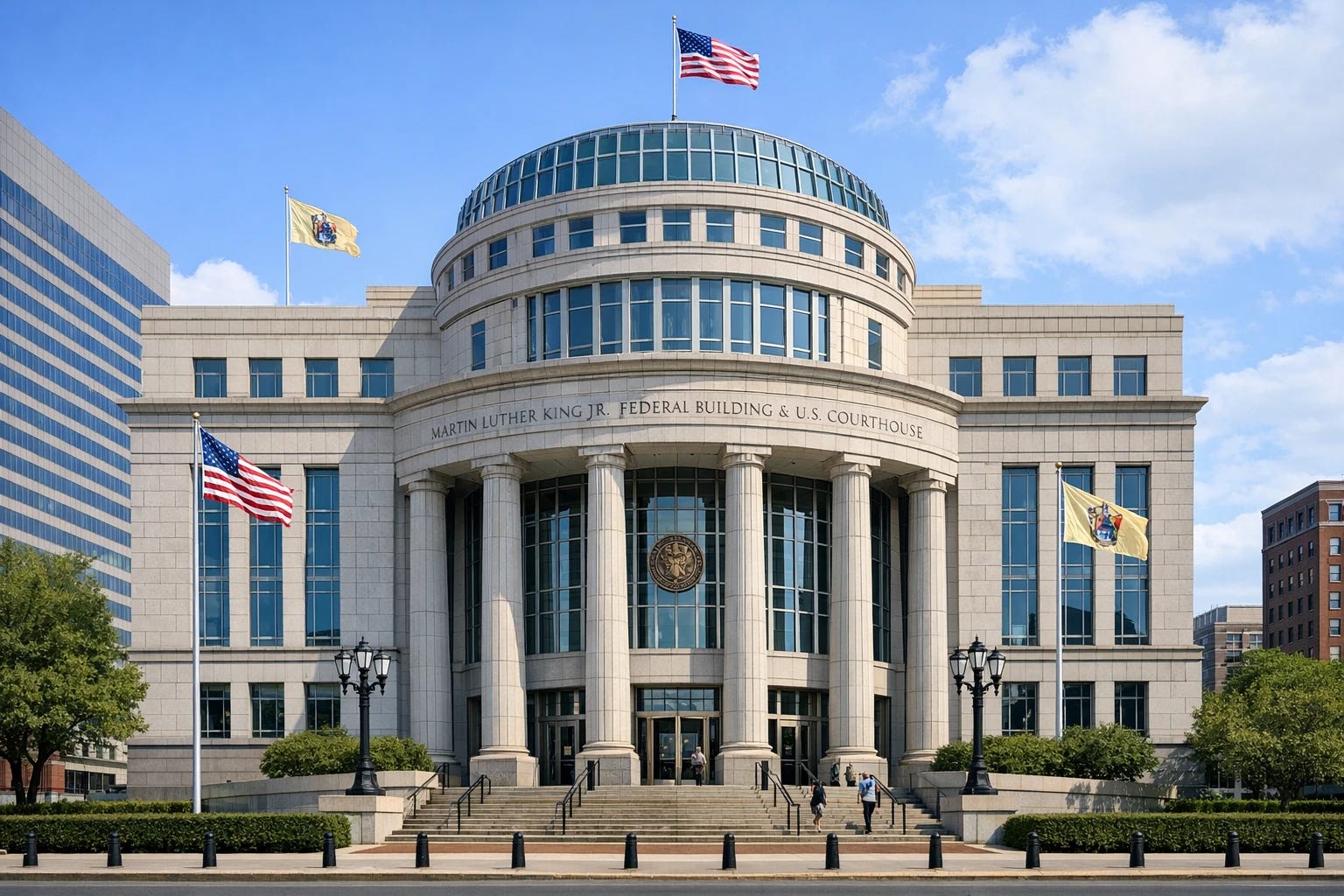
A federal judge listens for nearly seven hours as mothers describe burying sons, a teenager describes being born into withdrawal and losing his mother to opioids, and person after person describes years of addiction that began with a prescription.
The judge is visibly moved, then she approves the negotiated sentence.
The company will pay $225 million, the amount the federal government agreed to actually collect from a paper penalty of $5.5 billion. The Sackler family will contribute up to $7 billion over fifteen years, from future earnings. Victims will receive between $8,000 and $16,000, if they can prove they were prescribed OxyContin.
The judge said it plainly: ”It is not lost on me that those who started the epidemic will not serve a sentence.”
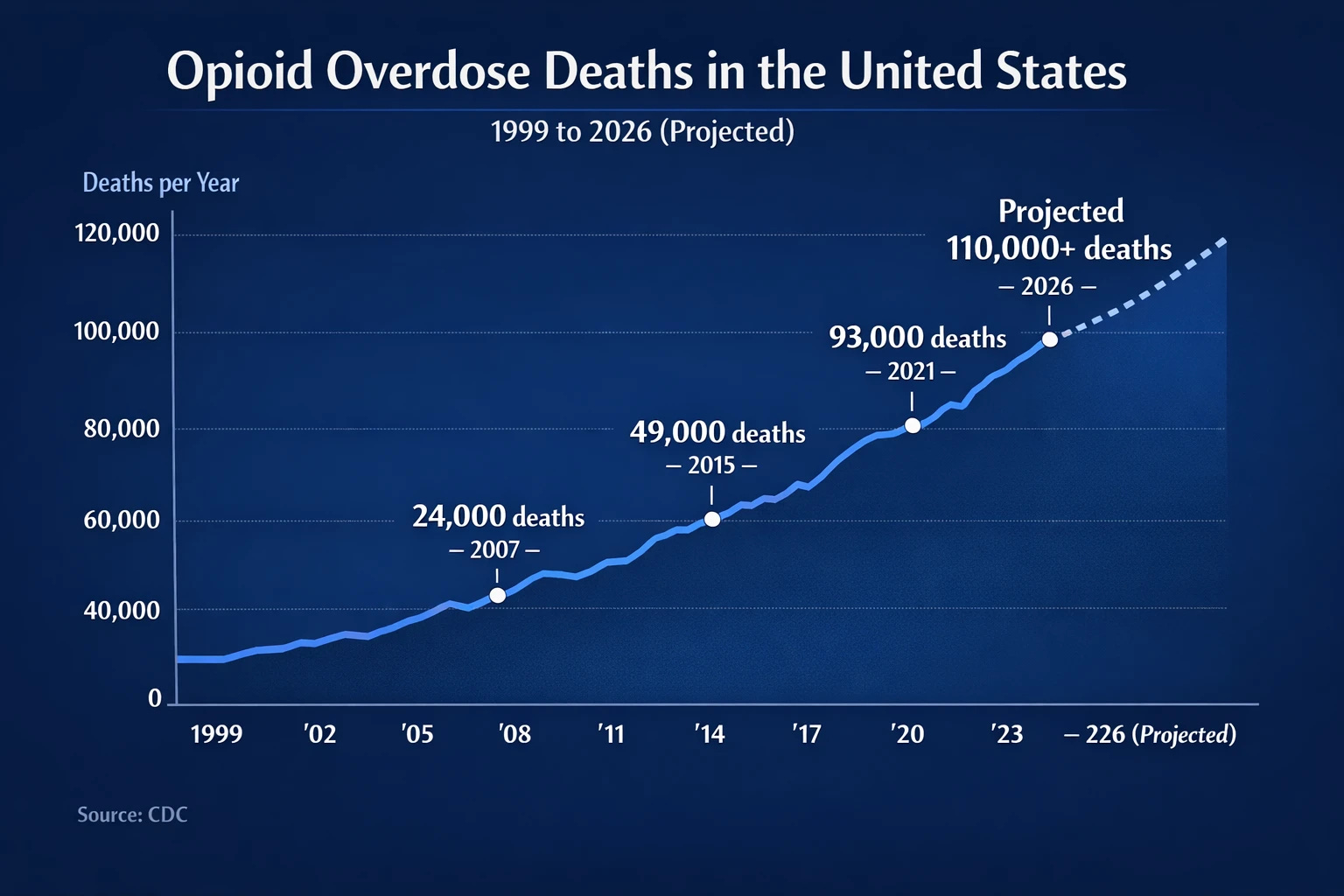
Death toll linked to the epidemic since 1999: 900,000.
Individuals criminally prosecuted: zero.
Where It Began
OxyContin launched in 1996 on two claims. First, that it provided twelve hours of consistent pain relief, making it safer than shorter-acting opioids. Second, that its addiction potential was less than one percent in patients treated for pain.
Both were known to be false by Purdue’s own leadership before the drug reached the market. According to a peer-reviewed case study published in PMC (Paremoer et al., PMC12344885) and the Harvard Public Health Review (Chow R, 2021, DOI:10.54111/0001/Y5), the addiction risk in chronic non-cancer pain populations has since been established at 20 to 50 percent across multiple studies. The twelve-hour duration claim was contradicted by the company’s own pharmacokinetic data.
Before OxyContin, opioids were prescribed primarily for cancer pain and end-of-life care. Purdue’s strategy deliberately expanded prescribing into chronic non-cancer pain, a larger population never treated with long-term opioids at scale before. They did this using the “pain as the fifth vital sign” campaign of the late 1990s that created the permissive prescribing climate that Purdue then weaponized.
At a 1996 sales rally, Richard Sackler called for “a blizzard of prescriptions.” Internal documents show the first-year sales goal was hit four months ahead of schedule. By September 1996, Sackler was personally monitoring whether physician dinner programs were cost-effective in driving prescription volume: physicians who attended wrote more than double the OxyContin prescriptions than those who didn’t.
The Machinery
A paid speakers program compensated physicians to prescribe and promote OxyContin at events designed to look like medical education. An electronic medical records company was paid to identify and target patients for increased opioid prescriptions. Fake grassroots pain advocacy organizations were constructed to simulate independent patient demand. Academic and hospital institutional relationships were cultivated to purchase scientific credibility.
Inside the company, more than one hundred internal memos from 1997 to 1999 contained the words “street value,” “crush,” or “snort” (DOJ Western District of Virginia, press release, May 10, 2007; STAT News document archive, December 2019). By March 2000, the company had received reports of OxyContin abuse, sales staff continued unrestricted promotion. As late as 2013 and 2014, McKinsey was advising Purdue on how to target the highest-volume prescribers and increase sales representative visit quotas.
If you enjoy evidence-based medical information, subscribe to receive these articles on your mailbox every week.
A separate physician group was deceived by falsified safety data about OxyContin. They were deceived deliberately, by a company that knew the truth and withheld it. However a Schedule II opioid claiming less than one percent addiction potential should have generated clinical skepticism.
A 2012 study in the New England Journal of Medicine found that 76 percent of those seeking treatment for heroin addiction had begun with pharmaceutical opioids, primarily OxyContin.
The Reckoning That Wasn’t
By 2006, career prosecutors at the Department of Justice had built a felony case including wire fraud, money laundering, and conspiracy, targeting Purdue executives who had knowingly misled physicians, patients, and regulators.
Purdue retained Rudy Giuliani’s firm to negotiate with the political leadership of the Bush Justice Department. Giuliani’s firm simultaneously held a $1 million consulting contract with the DOJ itself (Time magazine investigative report, 2018; Fierce Pharma, August 27, 2018; American Oversight FOIA documentation).
After a closed-door meeting, the felony indictments disappeared. Three executives, President Michael Friedman, General Counsel Howard Udell, and former Chief Medical Officer Paul Goldenheim, pleaded guilty to misdemeanor misbranding. They performed community service and paid fines totaling $34.5 million across the three. The company pleaded to felony misbranding and paid $600 million, approximately 90 percent of OxyContin profits during the offense period (DOJ Western District of Virginia, May 10, 2007; U.S. Senate hearing transcript, CHRG-110shrg40884).
OxyContin sales the following year: $2.2 billion. By 2010: more than $3 billion annually.
Two U.S. senators, Hassan and Whitehouse, spent years demanding the prosecution memo. The DOJ refused to release it (Senate letters, August 2018 and September 2019). The memo has never been made public.
What the Family Took
Between 1995 and 2007, the Sackler family extracted $1.3 billion from Purdue. In the decade following the first guilty plea they extracted $10.7 billion, much of it moved into offshore accounts and trusts beyond the reach of American creditors. Ninety percent of those distributions derived directly from OxyContin revenue (AlixPartners bankruptcy audit report; U.S. House Committee hearing transcript, CHRG-116hhrg43010, confirmed under congressional testimony by David Sackler).
In September 2014, Mortimer Sackler emailed a family member that Purdue was in “a death spiral.” Jonathan Sackler responded that they had “taken a fantastic amount of money out of the company.”
The Architecture of Impunity
The Sackler family contributed more than $1.6 million to federal candidates and officials, distributed across both parties (OpenSecrets/Center for Responsive Politics, April 4, 2019). Purdue donated more than $500,000 to the Republican Attorneys General Association in 2016 and $125,000 in 2018, an organization supportive of the lenient settlement terms (The Intercept, July 7, 2020; August 13, 2021). Lobbying spend peaked at $1.12 million in 2018, using nine revolving-door lobbyists. Contributions to both parties’ attorneys general associations continued during active bankruptcy proceedings. Unsurprisingly, no direct quid pro quo was ever proven.
Ed Bisch, who lost his son Eddie to an overdose in 2001, stood outside the courthouse holding a sign: “Punishable by fine means legal for a price.”
What the Resolution Actually Means
A $5.5 billion criminal sentence, of which $225 million will actually be collected by the federal government. A Sackler family contribution of up to $7 billion, paid from future earnings over fifteen years, not from the $10.7 billion already extracted and moved offshore. The settlement across all parties totals approximately $50 billion, most designated for opioid remediation through government entities. Individual victim compensation is only expected to be around $8,000 to $16,000, contingent on documentation.
Alexis Pluis, an upstate New York mother who lost her son to opioids in 2014, testified today that she expects to receive nothing because she cannot locate the twenty-three-year-old prescription records required to prove her claim. She stated: ”We still deserve justice, and this isn’t it.”.
The Argument, Stated Directly
Federal drug law prosecutes the street dealer and the cartel kingpin on the same conspiracy theory. In their 2020 guilty plea, Purdue’s executives admitted that they “knowingly and intentionally conspired and agreed with others to aid and abet” illegal prescribing (U.S. Department of Justice, Criminal Division, November 24, 2020). The decision not to prosecute individuals was a choice made by people with access to the people making decisions, and the resources to hire those with that access.
What happened to Purdue Pharma is not just the story of one corrupt company finally brought to account. It also the story of what money and access can purchase in the American legal system.
Nine hundred thousand deaths. No prison sentences.
Found this article useful? Share your thoughts. Join the conversation below.
Educational content on The Metabolic Archives is free, because medical information should be accessible to everyone. If you find value and want to support the work, a paid subscription is available and genuinely appreciated. Visit the About Page for additional information.
The Metabolic Archives is for educational and informational purposes only, and is not intended as medical advice, diagnosis, or treatment, and does not constitute a doctor-patient relationship. Do not adopt any recommendation discussed in any article or guides published here, make changes or abandon any prescribed medical treatment without prior consultation with your physician. Always seek the advice of your physician or other qualified health provider for any questions regarding your medical condition and recommended treatment options.
By reading this post, you acknowledge that you have read and agree to the Terms of Service of The Metabolic Archives, which govern all use of this content including restrictions on reproduction.
© 2026 The Metabolic Archives. All rights reserved.
Tags: opioid epidemic, Purdue Pharma, Sackler family, institutional accountability, pharmaceutical fraud, public health policy, opinion