

Every year roughly 73,000 Americans with diabetes had a lower extremity amputation for reasons other than an accident or injury. Diabetes is the leading cause of non-traumatic amputations in the United States, and after decades of steady improvement the trend is reversing.
A 2019 study in Diabetes Care found that amputation rates fell 43% between 2000 and 2009, then rebounded 50% between 2009 and 2015, with the sharpest increases found among adults under 65 (Geiss et al., Diabetes Care, 2019).
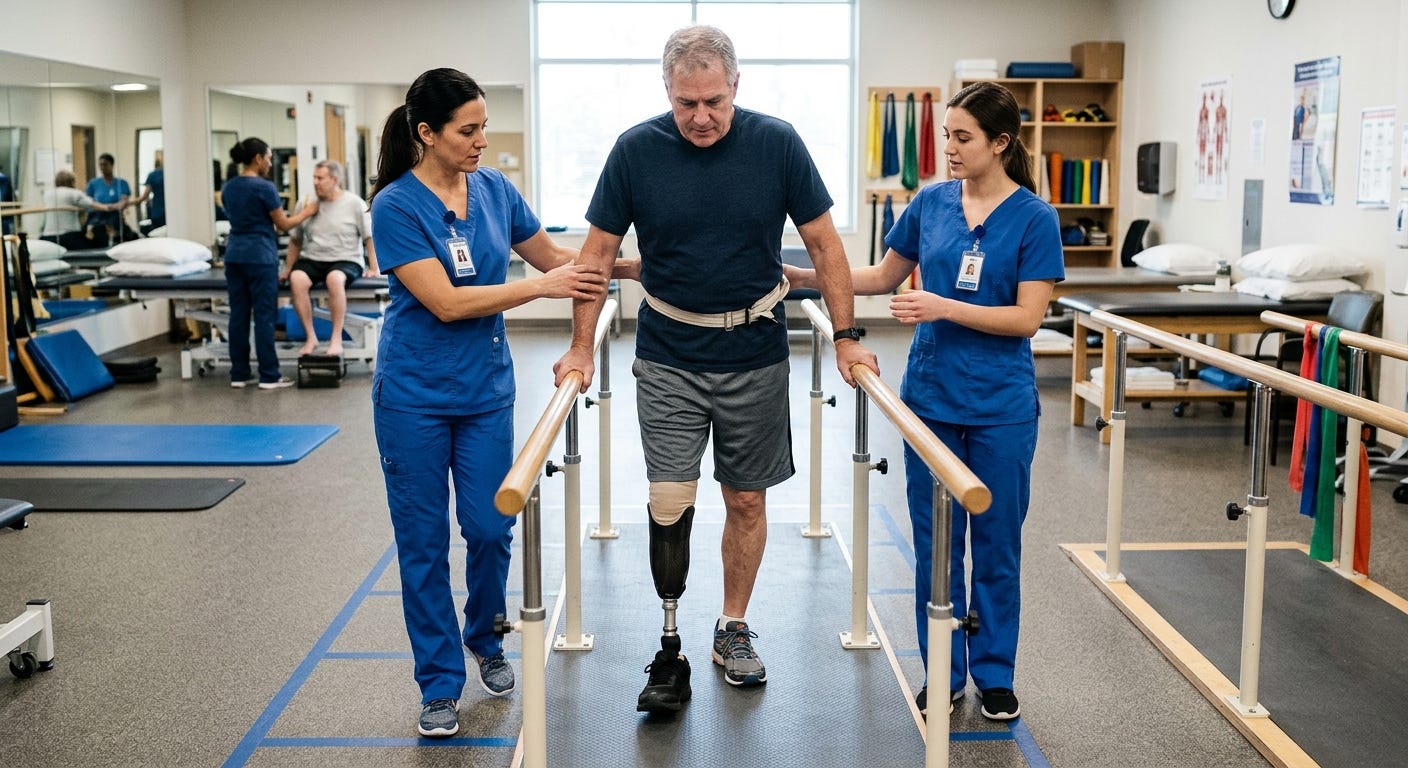
And a sobering statistic, the five years mortality rate among diabetic patients after amputation is about 50%, worse survival rate than most cancers.
The problem in plain terms
Diabetes damages blood vessels over time, less oxygen and fewer infection-fighting cells reaching the tissues. Wounds that normally heal in days for someone else can fester in diabetics for weeks.
Diabetes also damages the nerves that carry sensation, a condition called peripheral neuropathy. As it progresses your feet stop reliably registering pain, pressure, heat, and even the position of your foot in space.
The result of these changes is a foot that can be seriously injured without your knowledge, and cannot heal quickly once it happens.
The blood flow problem
Diabetes damages blood vessels of every size, but the small vessels supplying your feet are hit early and hard. This is called peripheral vasculopathy, and over years it also affects larger arteries in the legs, a condition called peripheral artery disease (PAD). Reduced blood flow means the immune system has a harder time reaching an infection site, and your tissues have less oxygen and nutrients needed to repair itself. A minor wound can stay open for weeks in a foot with compromised circulation, significantly increasing the risk of infection and gangrene.
The force multiplier
If you smoke and you have diabetes, you are combining the two strongest risk factors for PAD.
A 20-year study of nearly 15,700 people in Scotland, the Scottish Heart Health Extended Cohort, found that people with diabetes who smoked were roughly 16 times more likely to develop PAD than nonsmokers without diabetes (Tunstall-Pedoe et al., reported by University of Dundee and the British Heart Foundation, 2017).
Carbon monoxide reduces how much oxygen your blood can carry, nicotine causes your blood vessels to spasm and narrow, and smoking thickens your blood, making it flow less easily through small vessels. All of this compounds what diabetes is already doing to the vessels in your feet. If you are diabetic and you smoke, quitting is one of the most protective things you can do for your feet.
The warning system failure
Roughly 47% of people with diabetes develop peripheral neuropathy, and about 7.5% already have it at the time of diagnosis (Diabetes and Nerves Register Initiative, Diabetes Research and Clinical Practice, 2020). Neuropathy strips away sensation gradually, usually starting in the toes and moving upward. You can step on a nail and not know it, develop a blister from an ill-fitting shoe that and not feel it, put your foot in bathwater hot enough to burn you and not realize it until you see the burn.
Pain is your body’s alarm system, neuropathy disables it. In a diabetic foot with neuropathy, pain, or the absence of pain, tells you nothing about how serious an injury is.
No pain never means no problem.
Good glucose control slows the progression of both neuropathy and vasculopathy, it does not guarantee it will not happen. Even patients with excellent long-term control develop some degree of neuropathy over time, showing up first as subtle changes like loss of hair on the toes or unusually dry skin. Daily foot surveillance matters for every diabetic, more on that later.
Neuropathy also affects the nerves controlling sweat glands in your feet. Less sweating means drier skin and cracked skin; those cracks become a potential entry point for infection. Moisturizing your feet daily is a medical recommendation.
Charcot foot
In a foot that has lost sensation, the small, repetitive stresses of ordinary walking can fracture bones and dislocate joints without the person feeling a thing. Over time this destroys the architecture of the foot.
The foot becomes hot, red, and swollen, frequently with no visible wound at all. Because it looks like an infection or a sprain, it’s frequently misdiagnosed as cellulitis, gout, or a simple sprain (Siddiqui et al., PMC, 2023). Early on plain X-rays can look completely normal, only a magnetic resonance imaging (MRI) catches it at that stage. Caught early, offloading weight from the foot can prevent permanent deformity. Missed, joint destruction progresses and can eventually require amputation. Remember, a hot, swollen, painless foot in a diabetic is a medical emergency until a doctor proves otherwise.
If you enjoy evidence-based medical information, subscribe to receive these articles delivered to your mailbox every week.
A patient I have never stopped thinking about
Years ago a patient came to the emergency room a week after a puncture wound at a construction job site. Advanced neuropathy silenced pain, he treated the wound at home thinking it was not that serious. He came in a week later, only because of the smell and the black discoloration spreading across his foot. By then he already had gangrene, a deep abscess, and bone infection.
Partial amputation of the foot was the only option left. Afterward, recurrent infections in the surgical wound required a below the knee amputation; he was never able to work construction again after that. Over the next four months, the accumulated damage of years of poorly controlled diabetes caught up with him: kidney failure, a heart attack, and finally death from multiple organ failure.
The real tragedy for him was that education about complications from chronic diabetes could have likely saved him: neuropathy causing decreased pain perception, and poor circulation leading to slow wound healing and high infection rate. Understanding the emergency this wound represented, he would have sought timely medical care possibly saving his leg and his life.
Research following amputee outcomes consistently finds that the increased mortality is driven by cardiovascular disease and kidney failure (Dillon et al., Journal of Vascular Surgery, 2020; Baviera et al., Cardiovascular Diabetology, 2024).
The cost beyond dollars
Medicare spending on diabetes-related amputations almost doubled from $1.2 billion in 2011 to $2.1 billion in 2016. A single amputation typically costs between $20,000 and $60,000 in direct medical costs.
For a working-age adult, an amputation often means the end of a career dependent on physical mobility, sudden dependence on family members for basic tasks, caregiving falling on a spouse or adult children, and carries a heavy toll of depression and social isolation unaccounted by the economic statistics.
An amputation doesn’t just change your health, it changes your entire life and the lives of everyone who loves you.
Who bears this burden isn’t random
A 2021 study in Diabetes Care found that Hispanic and Native American were more likely to undergo both minor and major lower-limb amputations, with the risk climbing in rural areas and in the South (Akinlotan et al., Diabetes Care, 2021). A separate systematic review in Health Affairs found white patients were substantially more likely to receive limb-saving revascularization surgery than Black or Hispanic patients facing the same threat (Tan et al., Health Affairs, 2022). These gaps persist even after accounting for insurance coverage.
Often the people at highest risk have the least access to the education and care that could have protected them. That is why this information needs to reach people directly, not through a rushed office visit.
The daily habits that actually prevent amputation
Inspect both feet every day, right after bathing. Sit down and look closely at the skin: red spots, calluses, blisters, breaks in the skin, swelling, or any change in color. Use a hand or dental mirror to see the soles and the spaces between your toes, since those are the areas you’re most likely to miss and where skin fissures go unnoticed. Loss of hair on your toes or feet is worth noting too, since it can be an early sign of nerve or blood vessel damage. If your eyesight makes this difficult ask a family member to check for you.
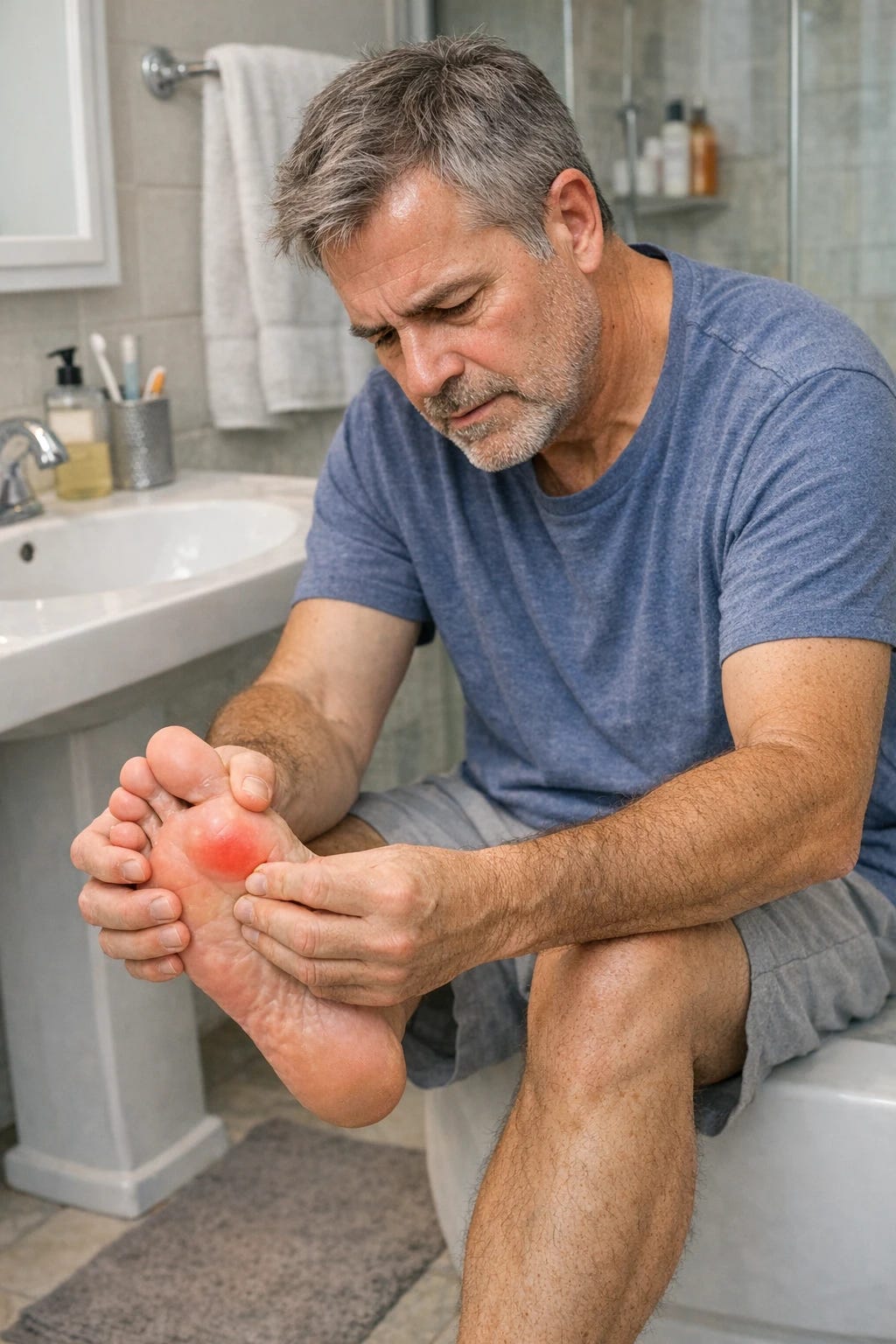
Treat your shoes as protective equipment, not fashion. A callus is a warning sign that your shoe fits poorly. Buy shoes in the afternoon, when your feet are at their most swollen, so you don’t end up with shoes that are too tight later in the day. Check inside your shoes for pebbles or debris every single time before putting them on. Never walk barefoot, even at home. If you have significant neuropathy, ask your doctor about custom-fitted therapeutic shoes, which Medicare covers (details below).
Never use over-the-counter (OTC) callus, corn, or wart treatments of any kind on a diabetic foot. Not the chemical ones containing salicylic acid, they painlessly erode healthy tissue, or the freezing treatments, they deliberately destroy tissue and create a wound that can get infected. Not pumice stones, files, or razor-based callus removers. Anything designed to remove tissue is, by definition, designed to create a wound. Let a podiatrist or your family doctor handle calluses and corns.
For any cut or wound, clean with mild soap and water only. Skip the hydrogen peroxide, rubbing alcohol, and iodine. These are toxic to the skin cells your wound needs to heal, and slow healing further in a foot with compromised circulation. This is the same standard used for surgical wound care in healthy patients. Let your doctor decide what, if anything, goes on the wound.
Don’t trim your own toenails. Have a family member or a healthcare professional do it. Improper trimming is a common, avoidable cause of cuts and ingrown nails that can turn into infections.
Moisturize your feet daily, but not between the toes, where extra moisture promotes fungal infection. Since neuropathy reduces sweating and leads to dry, cracked skin, this is medical care, not a spa habit.
Test bathwater with a thermometer before stepping in. Never rely on touch, your sense of temperature is likely diminished, and water that feels fine to your hand can be hot enough to burn a foot you can’t feel. Aim for a water temperature about 100–105°F (37.8–40.5°C).
At every doctor’s appointment, take off your shoes and socks even if not asked. Feet get overlooked in a rushed visit unless you make them impossible to ignore.
Warning signs that need immediate attention
Any minor foot injury in a diabetic foot requires a same-day call to your doctor. Anything severe as described below, requires a trip to the emergency room (ER).
Swelling of the foot or ankle. Swelling increases the pressure around the small vessels increasing the risk of compromised circulation leading to ulcers or gangrene.
Increasing redness. This may be the first sign of an infection.
New warmth, especially if one foot feels noticeably warmer than the other, which can indicate infection or Charcot foot
Any dark discoloration, even a small patch. Dusky colored skin may represent severely compromised circulation, black skin is usually indicative of gangrene.
Any break in the skin with redness or drainage. Prompt attention will greatly increase the chance of full recovery.
Any crush injury such as having a heavy object drop on your foot, or hitting the foot against furniture particularly if barefooted. Crush injury cause rapid local swelling that can lead to compromise circulation, ulcers and gangrene. With a severe enough swelling, gangrene can develop within a few days, please don’t wait.
Pain is not a reliable guide here, its absence tells you nothing. Don’t wait to see if it gets better on its own, and don’t try to treat it yourself first. Call your doctor the same day and ask for an urgent appointment, if nothing is available, go to the ER. The large majority of these amputations are preventable when problems are caught and treated early.
A Medicare benefit almost nobody uses
Since 1993, Medicare Part B has covered therapeutic shoes and shoe inserts for diabetic patients with a qualifying foot condition: a history of amputation, a prior foot ulcer, pre-ulcerative calluses, neuropathy with callus formation, poor circulation, or foot deformity. Coverage includes one pair of extra-depth shoes plus up to three pairs of inserts per year, or one pair of custom-molded shoes plus two additional pairs of inserts, with Medicare paying 80% after the Part B deductible.
If your doctor hasn’t brought this up and you have a qualifying condition, ask; there’s no good reason you shouldn’t have access to proper shoes.
What to take from this
The majority of diabetic amputations are preventable, not through advanced technology or expensive procedures, but through daily attention, appropriate footwear, and basic knowledge: your feet can no longer be trusted to tell you when something is wrong.
Your eyes need do the job your nerves can no longer do, use them every day.
Found this article useful? Share your thoughts. Join the conversation below.
The Metabolic Archives is for educational and informational purposes only, and is not intended as medical advice, diagnosis, or treatment, and does not constitute a doctor-patient relationship. Do not adopt any recommendation discussed in any article or guides published here, make changes or abandon any prescribed medical treatment without prior consultation with your physician. Always seek the advice of your physician or other qualified health provider for any questions regarding your medical condition and recommended treatment options.
By reading this post, you acknowledge that you have read and agree to the Terms of Service of The Metabolic Archives, which govern all use of this content including restrictions on reproduction.
© 2026 The Metabolic Archives. All rights reserved.