
The FDA Peptide Vote: A Stacked Panel, No Evidence, And A Pre-Ordained Decision
Inside the Decision That Will Put Unproven Peptides in Your Local Pharmacy

OPINION PIECE
On July 23, 2026, a Food and Drug Administration (FDA) advisory panel voted 8 to 6 to recommend that compounding pharmacies be allowed to produce and dispense a substance called BPC-157, one of the most popular peptides in the wellness industry. One panel member abstained. An identical 8-6 vote followed for a second peptide, KPV. Votes on two more peptides are expected this afternoon, with three additional substances scheduled for Friday.
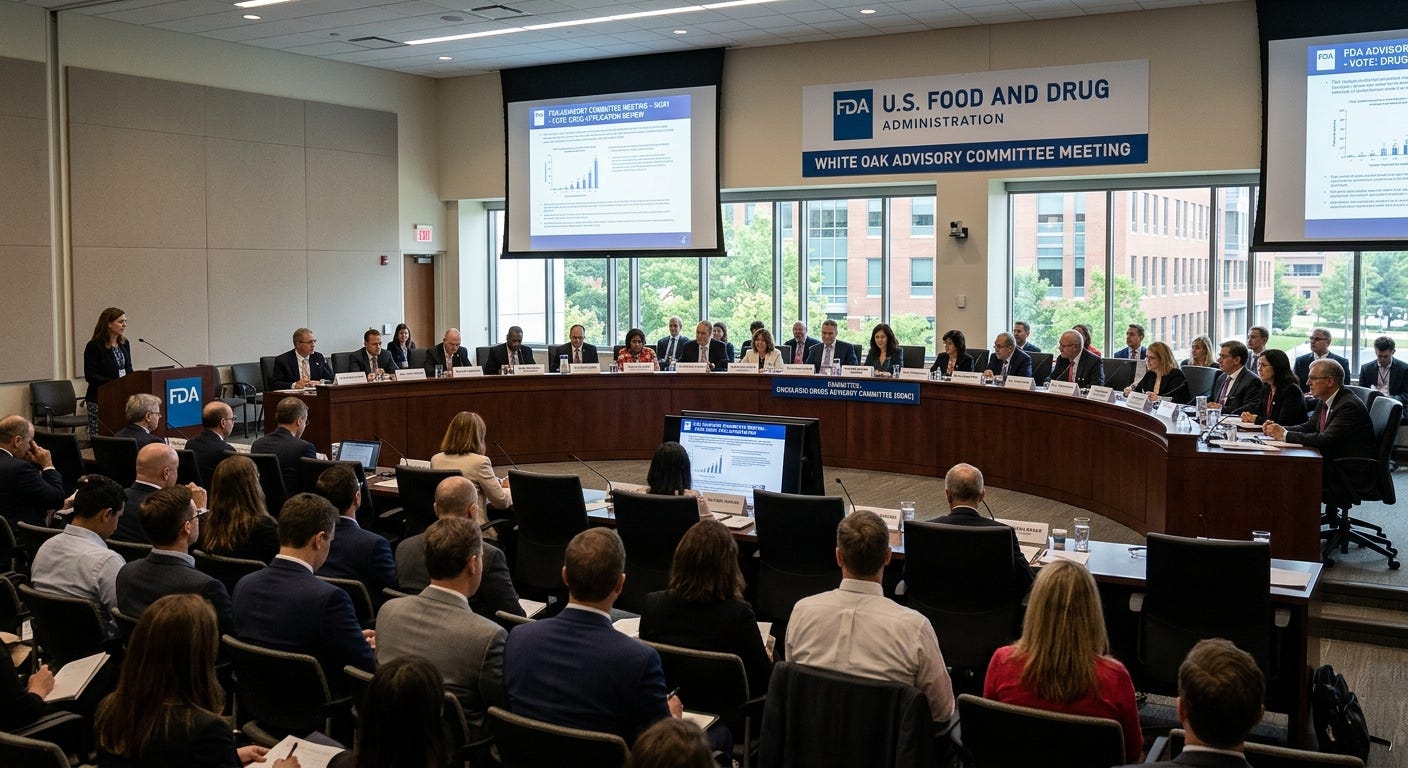
The FDA’s own career scientists reviewed the evidence on all seven peptides and recommended against every one of them; the panel voted yes anyway. I addressed the science behind most common peptides here: The Evidence Gap the Peptide Industry Doesn’t Want You to Think About.
These substances will soon be available by prescription at compounding pharmacies across the country. You will hear about them. You may already have heard about them. And the single most important thing you need to understand is this: a prescription for a compounded peptide will look identical to any other prescription you have ever received. But the scientific foundation behind it is not remotely comparable to what stands behind other medications.
What “Cleared for Compounding” Means
When a pharmaceutical company develops a new drug, it spends years conducting clinical trials. The FDA then reviews all of that data before granting approval; that is what FDA Approved means.
Being placed on the FDA’s 503A compounding list is a different thing entirely; it means pharmacies are permitted to mix and dispense a substance. It is a regulatory permission, not a scientific validation. The FDA did not determine that it works or is even safe.
What the FDA’s Own Scientists Found
The agency’s career scientists reviewed the available evidence on all seven peptides under consideration and concluded that none met the criteria for inclusion on the compounding list (FDA briefing documents, July 2026).
For BPC-157, the most popular peptide in the wellness space, here is what the total published human evidence looks like:
Fewer than 30 total human subjects across all published studies. These include a 2024 interstitial cystitis pilot study with 12 patients, a 2021 knee pain study with 16 patients, and a 2025 intravenous safety pilot involving 2 healthy adults. The largest planned Phase I trial, registered in December 2015, was canceled without publishing results. The first properly designed RCT, a double-blind, placebo-controlled Phase 2 study of 120 participants for hamstring strain, began recruiting in February 2026 and has not yet reported results (ClinicalTrials.gov, NCT07437547).
For context, NYU Langone endocrinologist Dr. Rachel Pessah-Pollack noted that BPC-157 has been tested in roughly 30 humans, compared to the hundreds of thousands of subjects studied in the clinical trials that led to the approval of GLP-1 drugs like Ozempic and Wegovy (CBS News, July 23, 2026).
Russell Wesdyk, an associate director in the FDA’s drug center, raised a concern during the meeting that goes beyond the limited evidence. He stated that the name “BPC-157” has no standardized pharmaceutical definition. There is no way to guarantee that what a compounding pharmacy mixes under that name is the same substance studied in those few small trials (Associated Press, July 23, 2026). The FDA staff also raised concerns about contamination risks, allergic reactions, and quality control problems.
Both BPC-157 and TB-500, another peptide under review, are classified as prohibited substances by the World Anti-Doping Agency (WADA) under the 2026 Prohibited List (WADA 2026 Prohibited List; USADA).
The Off-Label Prescribing Gap
The Pharmacy Compounding Advisory Committee (PCAC) reviewed BPC-157 in the context of specific conditions, including ulcerative colitis and gut healing. But once a substance is cleared for compounding, clinicians have broad discretion to prescribe it for any condition. That is how off-label prescribing works across medicine.
What this means: you may be offered these peptides for knee pain, muscle recovery, anti-aging, longevity, and conditions that were never evaluated in the review process. Telehealth platforms and online wellness services are already positioned to begin offering compounded peptides as soon as the FDA clears them (STAT News, July 23, 2026).
The Advisory Panel Reconstitution
The PCAC was originally created under the FDA Modernization Act (FDAMA) of 1997 and re-established in 2012 under the Drug Quality and Security Act (DQSA) of 2013. That legislation was passed in direct response to a catastrophe: the 2012 New England Compounding Center (NECC) fungal meningitis outbreak, which killed more than 60 people and infected over 750 patients across 20 states from contaminated compounded injectable drugs (FDA Human Drug Compounding Progress Report, January 2017). The PCAC’s charter specifies membership from organizations including the National Association of Boards of Pharmacy and the United States Pharmacopeia, along with pharmacists, physicians, and patient advocacy representatives.
For over a decade, spanning multiple administrations, the panel was composed of independent academic experts from institutions including Duke, Harvard, and Johns Hopkins. Those panels repeatedly voted against allowing peptide compounding, finding the substances too risky and the evidence too thin.
In June 2026, the panel was reconstituted, eight of twelve members were newly appointed on June 29, less than a month before the vote. All but one of the new appointees had financial ties to businesses that sell or administer peptides (Associated Press, June 29, 2026; U.S. News/HealthDay, July 1, 2026). The panel now included wellness clinic owners who prescribe peptides, pharmacists who compound them, and consultants who promote them online. The Associated Press identified members including a doctor who runs clinics selling peptide, testosterone, and weight-loss injections and another who charges $500 for peptide consultations and promotes BPC-157 online.
Days before the meeting, apparently in response to criticism, the FDA added a handful of academic temporary voting members but it did not change the outcome.
The result: the same peptides, reviewed by a reconstituted panel, produced the opposite outcome of a decade of prior votes. The 8-6 vote split perfectly along the line between industry-connected and non-industry members, every industry-connected member voted yes.
Dr. Peter Lurie, a former FDA associate commissioner who now serves as president of the Center for Science in the Public Interest (CSPI), stated that a reputable panel would typically exclude members with a financial interest in the outcome of a vote (U.S. News/HealthDay, July 1, 2026). In April, he told CBS News that he did not believe the process represented an honest investigation, and characterized the situation as a “profound threat” to the FDA’s decades-old system for vetting drugs (CBS News, April 16, 2026).
Kennedy himself has publicly acknowledged that expanding access to peptides and experimental therapies means “you’re going to get a lot of charlatans” (CSPI statement citing Kennedy’s remarks, April 16, 2026).
If you enjoy evidence-based medical information, subscribe to receive these articles delivered to your mailbox every week.
The Harshbarger Narrative
One member of the reconstituted panel illustrates the depth and interconnectedness of the conflicts at play. What follows is a chronological sequence of verified facts.
Robert Harshbarger Jr., a licensed pharmacist from Kingsport, Tennessee, doing business as American Inhalation Medication Specialists, Inc., pleaded guilty on May 21, 2013 to one count of distributing a misbranded drug and one count of health care fraud. He admitted purchasing iron sucrose from Chinese companies and substituting it for FDA-approved Venofer, the only iron sucrose drug approved for kidney dialysis patients, in sales to Kansas Dialysis Services from 2004 to 2009. He was sentenced to 48 months in federal prison, ordered to pay restitution of $848,504 and a $25,000 criminal fine, and forfeited $425,000 in cash. His pharmacy license was revoked (U.S. Department of Justice, District of Kansas, May 21, 2013; November 4, 2013).
His wife, Diana Harshbarger, is also a licensed pharmacist who operates Premier Pharmacy, a compounding pharmacy in Kingsport, and a former board member of the International Academy of Compounding Pharmacists. She was first elected to Congress in 2020 representing Tennessee’s 1st District, running on a platform that included criticizing reliance on Chinese pharmaceuticals as a national security concern (WJHL, May 13, 2020).
On November 3, 2025, President Trump endorsed Diana Harshbarger for reelection. On November 7, Trump signed a pardon for Robert Harshbarger Jr. A White House official defended the pardon by characterizing the crime as “a common practice among pharmacists known as ‘compounding,’ in which unapproved drugs are provided to patients” (Associated Press, November 11, 2025).
On November 10, 2025, three days after the pardon, Diana Harshbarger sent a letter to Health and Human Services (HHS) Secretary Kennedy urging the FDA to exercise enforcement discretion with respect to compounding of certain peptides, specifically naming BPC-157, CJC-1295, Ipamorelin, Thymosin alpha-1, TB-500, and GHK-Cu. The letter explicitly requested that the FDA assess these substances based on their safety profile and suitability for compounding rather than on whether a manufacturer has pursued traditional pharmaceutical approval (Diana Harshbarger letter to HHS Secretary Kennedy, November 10, 2025; hosted by the Alliance for Pharmacy Compounding).
On June 29, 2026, their son Bobby Harshbarger, a Tennessee State Senator and a pharmacist at the family’s Premier Pharmacy, which sells compounded medications for weight loss, longevity, pain, and other conditions, was appointed to the PCAC (STAT News, June 29, 2026). On July 23, 2026, he voted as part of the 8-6 majority recommending BPC-157 for compounding.
The Supply Chain Problem
The most commonly offered argument in favor of clearing peptides for compounding is a practical one: moving these substances into licensed pharmacies will steer people away from unvetted gray-market products sold online, often sourced from overseas with no quality controls.
There is a legitimate core to that argument: people are already using these peptides, the gray market is real, and it is dangerous.
But the argument has a gap. The bulk peptide powder that compounding pharmacies will use has to be sourced somewhere, and the supply chain for these raw materials is largely unregulated. A June 2026 investigation by the blockchain analytics firm Chainalysis, subsequently reported by Axios on July 7, 2026, found that crypto payments to gray-market peptide vendors rose from $12 million to $32 million in a single quarter, a 159% increase, pushing the sector past a $100 million annual run rate. The investigation found proceeds from U.S. online peptide sales flowing to China-based manufacturers of chemicals used to produce synthetic opioids like fentanyl.
Chainalysis identified specific companies: one, Shanghai Sigma Audley, had operated as a fentanyl precursor supplier with documented links to darknet vendors before rebranding into weight-loss peptides. Another, Bigreat Technology, a supplier of precursors for fentanyl and synthetic amphetamines, created a shell company called Zhengzhou DEPU Technology to sell peptides directly to Western buyers, using the same laboratory (Chainalysis, June 2026; Axios, July 7, 2026). The Partnership for Safe Medicines raised these supply-chain concerns in its opposition to the compounding recommendation.
The Enforcement Irony
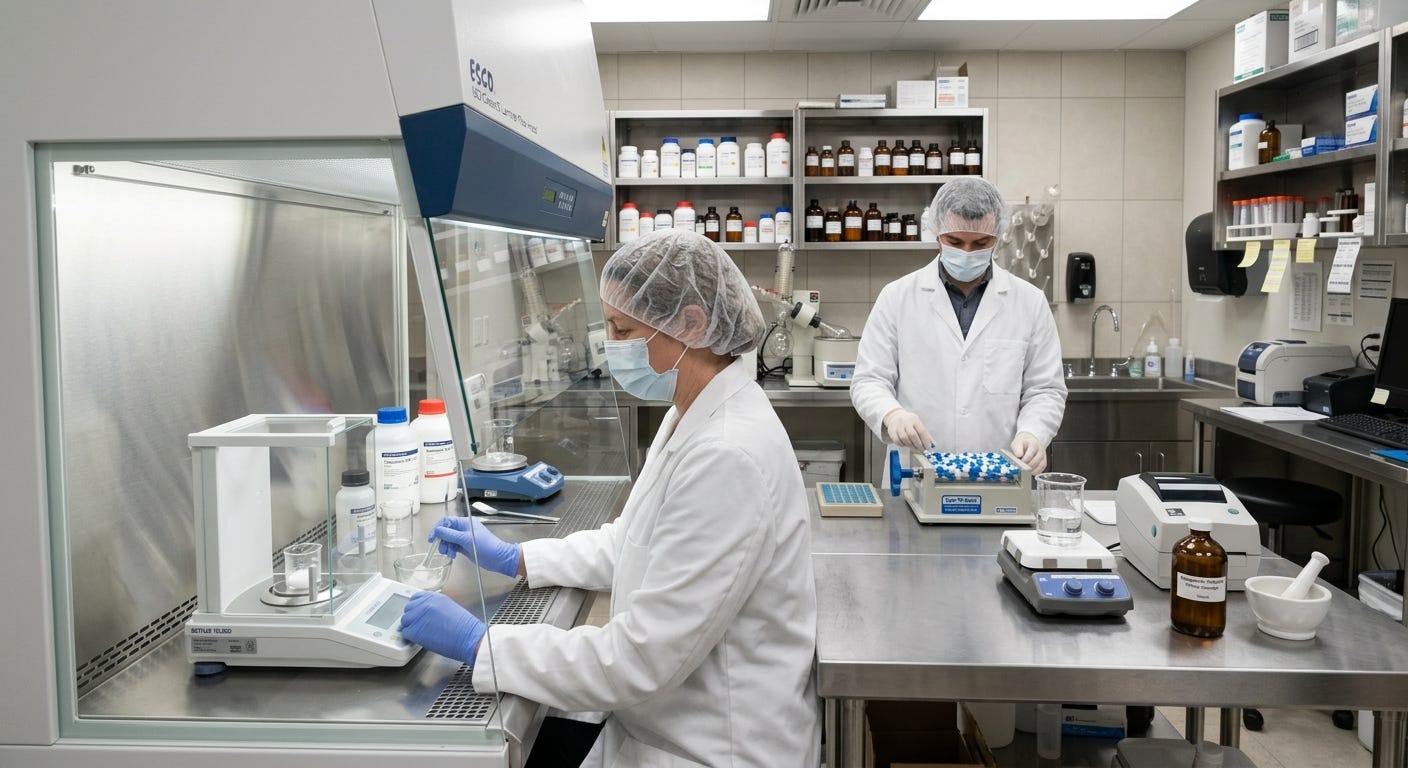
Until this vote, distributing these same peptides was a criminal offense. Tailor Made Compounding LLC, a Kentucky pharmacy, pleaded guilty to distributing unapproved new drugs including BPC-157 from October 2018 through April 2020 and forfeited $1,788,906.82 (U.S. Department of Justice, Eastern District of Kentucky, October 2020). The FDA issued more than 50 warning letters to compounders, online sellers, and clinics in 2024 and 2025.
What was a federal crime is about to become a prescription, only because the political environment changed and the advisory panel was deliberately stacked in favor of the industry.
What This Means for You
If your doctor writes you a prescription for BPC-157 next year, that prescription will look and feel identical to any other prescription you have received. Everything about the experience will communicate that this is a vetted, evidence-based medical product.
It is not! And here is what you need to know before you fill it.
The absence of evidence of harm is not evidence of safety. It means the studies that would detect harm have not been conducted.
Anecdotes are not data, social media testimonials cannot account for placebo effects, natural healing, concurrent treatments, or the fact that people who saw no benefit or were harmed rarely post about it.
Your doctor may not know much more than you do, the clinical data that would otherwise inform prescribing decisions does not yet exist. Physicians will be making clinical judgments with the same limited evidence base available to anyone who reads the FDA briefing documents.
The Bottom Line
Of 24 speakers who offered public comment on BPC-157 at today’s meeting, four were scientists who argued against broader access. The remaining 20 were doctors, chemists, and peptide business owners who favored it, relying on personal and patient anecdotes (CBS News, July 23, 2026). One industry-connected panel member, David Pope, chief pharmacy officer of Xifin Pharmacy Solutions, stated: “I voted yes because it’s time to put this decision back in the hands of the patient, the physician and the pharmacist” (Associated Press, July 23, 2026). That framing, patient autonomy and physician discretion, sounds reasonable until you recognize that neither the patient nor the physician has access to the clinical data that would make such decisions informed.
The PCAC’s recommendation is non-binding, the FDA must still decide whether to accept it, publish a proposed rule, accept public comments, and issue a final rule, a process that typically takes 12 to 24 months.
If the science eventually supports these peptides, that would be welcome. But the science needs to be done first, not assumed on the basis of popularity and political enthusiasm.
Found this article useful? Share your thoughts. Join the conversation below.
The Metabolic Archives is for educational and informational purposes only, and is not intended as medical advice, diagnosis, or treatment, and does not constitute a doctor-patient relationship. Do not adopt any recommendation discussed in any article or guides published here, make changes or abandon any prescribed medical treatment without prior consultation with your physician. Always seek the advice of your physician or other qualified health provider for any questions regarding your medical condition and recommended treatment options.
By reading this post, you acknowledge that you have read and agree to the Terms of Service of The Metabolic Archives, which govern all use of this content including restrictions on reproduction.
© 2026 The Metabolic Archives. All rights reserved.
Just curious. Were the voters Republicans or Democrats?