
Do You Know The One Part of the Food Label That Actually Matters?
The nutrition label tells you the score. The ingredient list tells you the game.

We scan the nutrition facts panel, calories, fat grams, sodium, percentage daily values arranged in that familiar government-mandated table. We feel informed. We make a choice. We go home and eat the product.
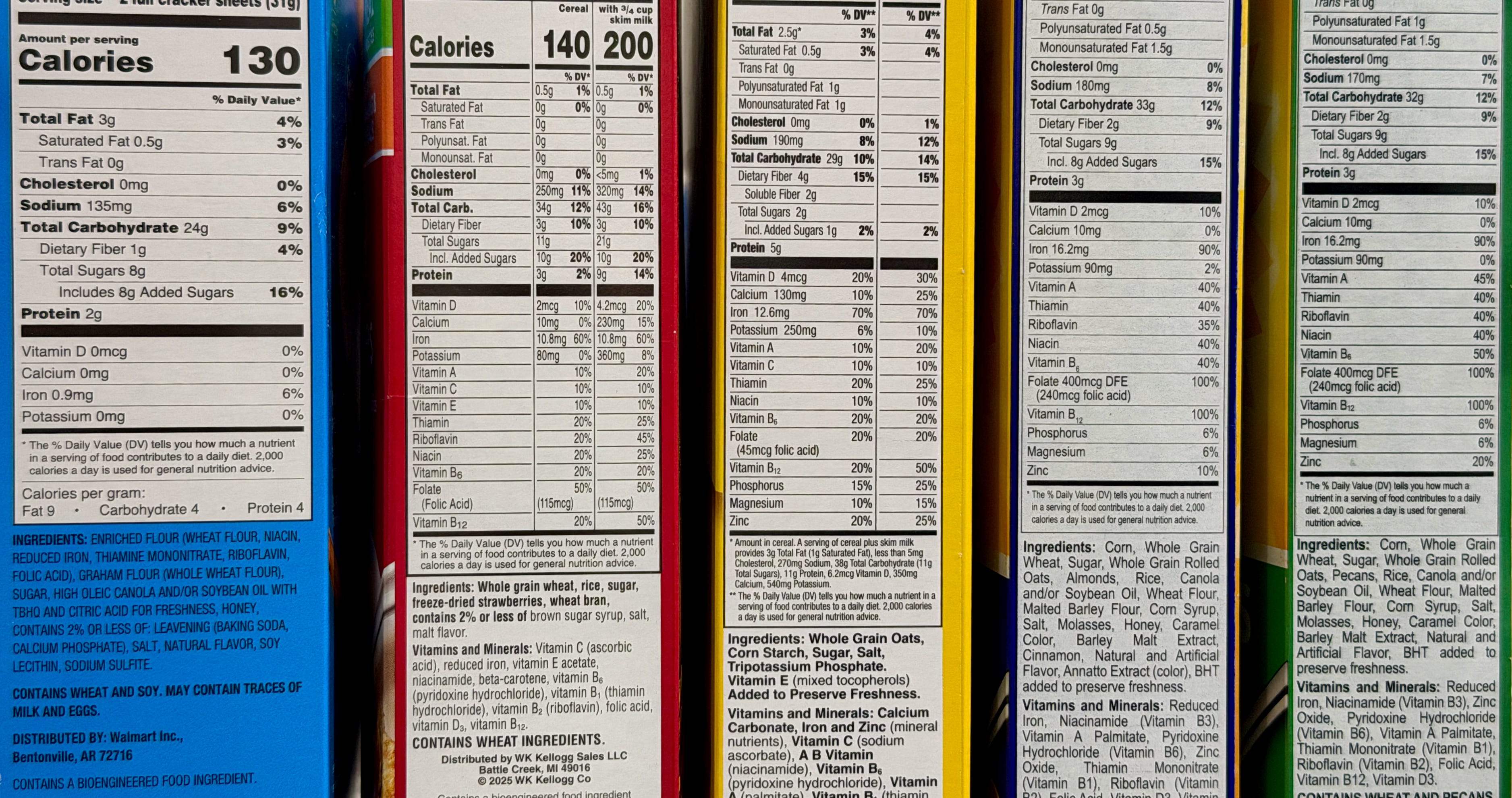
I want to suggest a reframe that I think will change how you navigate a grocery store for the rest of your life: shop the ingredient list, not the nutrition label.
Two Products, One Label
Take two products off the shelf, their nutrition labels can be nearly identical. One of them is a whole food and the other is a highly engineered industrial product designed to be palatable, shelf-stable, visually appealing, and profitable.
The nutrition label is regulated, standardized, and built around a fictional 2,000 calorie average that fits almost no one’s actual diet. The percentage daily values were designed to prevent deficiency diseases in a mid-20th century population, not to guide optimal eating in an era of ubiquitous ultra-processed food.
The ingredient list, on the other hand, tells you what someone actually made.
The First Five Ingredients
Here’s the first principle of reading an ingredient list: the first five ingredients are the food.
Ingredients are listed by weight in descending order. Everything that appears early in the list is present in substantial quantity. Everything after the first five or six items are, for practical purposes, additives, preservatives, and minor ingredients.
Would you cook with those first five ingredients? Not whether you recognize the names but whether they’re ingredients you’d reach for in your own kitchen to make food. Flour, oil, eggs, salt, water are fine. Corn syrup solids, modified food starch, partially hydrogenated soybean oil, isolated soy protein, artificial flavors, these are industrial ingredients with potentially negative impact on your metabolic health.
The Job Question
Every ingredient in a food product is there for a reason. The question worth asking is: what job is it doing?
Structural ingredients like flour, fat, eggs, water, are the food itself. Flavoring agents like real spices, herbs, and extracts add flavor because flavor is genuinely there. Preservation by salt, vinegar, or ascorbic acid (which is simply vitamin C) extends shelf life through mechanisms used for centuries.
Compensation ingredients — natural flavors, modified starches, added vitamins and minerals, are present because they were processed away and need to be partially replaced.
Then there are manipulation ingredients: multiple sweeteners, emulsifiers, artificial colors, flavor enhancers. These serve no nutritional purpose whatsoever. They’re there to make a product more visually appealing, immediately palatable, or difficult to stop eating. Research on ultra-processed food formulation is increasingly clear that these properties are engineered deliberately, and they interfere with the biological mechanisms that normally regulate how much we eat.
If you enjoy evidence-based medical information, subscribe to receive these articles delivered to your mailbox every week.
Disqualifying Ingredients
High fructose corn syrup — and its aliases: corn syrup solids, glucose-fructose syrup, isoglucose. When it’s one of your first five ingredients, this product is built on cheap, industrial sweetener.
Partially hydrogenated oils are the source of artificial trans fats. The FDA has removed their Generally Recognized As Safe status, and have been phased out but not entirely; the labeling rules allow products with less than 0.5 grams per serving to claim “zero trans fat.”
Fully hydrogenated oils are the industrial replacement: not technically trans fat by regulatory definition, but a highly processed fat base that appears in cheap manufactured foods for the same structural reason their partially hydrogenated predecessors did.
Sugar as the first or second ingredient means this is a confection. It may be marketed as a health food, but isn’t.
The Sugar Disguise Problem
Sugar has more than sixty names in use on ingredient labels. Manufacturers know that consumers scan for “sugar” in the early positions, their response was to fragment it.
If a product contains cane sugar, brown rice syrup, honey, dextrose, and maltodextrin, none of those individually may appear high on the list. Together they represent a product whose primary character is sweetness but distributed across five line items to obscure it.
What Seed Oils Are Really Telling You
Seed oils, soybean, canola, sunflower, corn, generate significant online controversy with claims ranging from measured concern about omega-6 to omega-3 ratios in processed food diets to overheated arguments that they’re the primary driver of metabolic disease.
The omega-6 imbalance from diets heavy in ultra-processed food is a legitimate concern, the evidence on dietary fatty acid ratios and inflammatory effects is real, and complex. Oxidation under high heat is also a real chemical problem. But the claim that seed oils directly cause insulin resistance through specific mechanisms is not well established.
What seed oils reliably tell you is something else: their prominence in an ingredient list is a reliable signal of industrial manufacturing. When it’s in your first five ingredients, you’re looking at a product built around cheap ingredients, not wholesome ones.
The Comparison Exercise
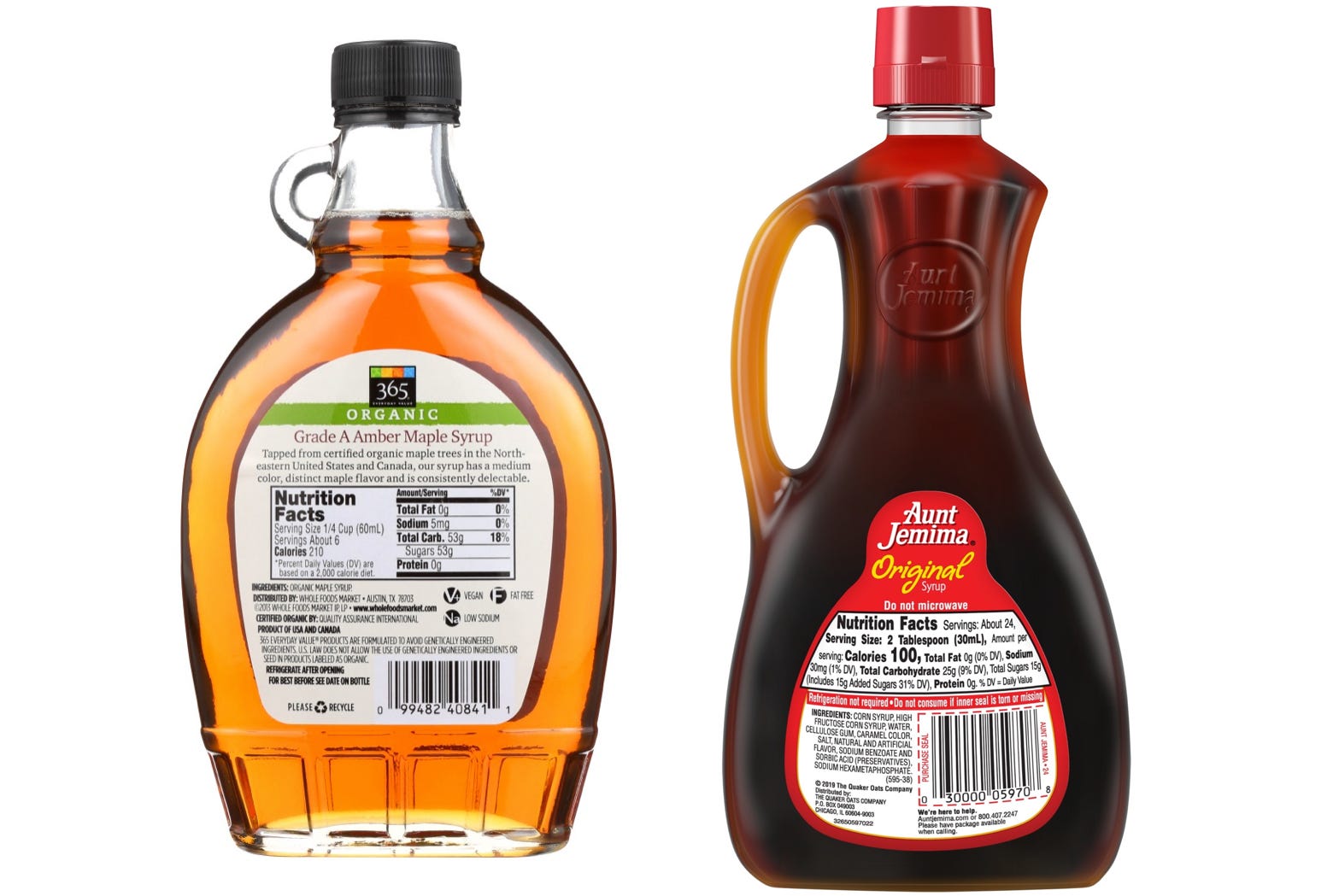
Next time you’re in the grocery store, try this with any two similar products:
Read the ingredient list not the nutrition label and work through this sequence:
First, count the ingredients. Fewer wins, almost always. Real food doesn’t need a paragraph to explain itself.
Second, read the first five ingredients. These are the food. Are they things you’d cook with?
Third scan for absolute disqualifying ingredients: high fructose corn syrup and its aliases, partially hydrogenated oils, sugar as the first or second item. Any of those in the first five put it back.
Fourth, count the structural red flags: multiple sweeteners, natural flavors in the first five, modified food starch, isolated proteins, cellulose listed as fiber. These are the tiebreaker between two products that cleared your initial disqualifying screens.
Then look at the added sugar grams on the nutrition label. By this point you’ve already done the real work.
The nutrition label was designed to prevent deficiency diseases in 1968. The food system it was designed to label has since been transformed into something its designers never imagined. The ingredient list hasn’t been compromised in the same way, it still tells you exactly what’s in there, in what order, if you know what you’re reading.
Visit the Resource Page and grab a handy reference guide of the most common industrial ingredients in ultra-processed foods.
Found this article useful? Share your thoughts. Join the conversation below.
Educational content on The Metabolic Archives is free, because medical information should be accessible to everyone. If you find value and want to support the work, a paid subscription is available and genuinely appreciated. Visit the About Page for additional information.
Disclaimer: The information provided in The Metabolic Archives is for educational and informational purposes only, and is not intended as medical advice, diagnosis, or treatment, and does not constitute a doctor-patient relationship. Do not adopt any recommendation discussed in any article or guides published here, make changes or abandon any prescribed medical treatment without prior consultation with your physician. Always seek the advice of your physician or other qualified health provider for any questions regarding your medical condition and recommended treatment options.
By reading this post, you acknowledge that you have read and agree to the Terms of Service of The Metabolic Archives, which govern all use of this content including restrictions on reproduction.
© 2026 The Metabolic Archives. All rights reserved.
Is your Resource Guide only available to paid members?