
When Fiber Makes You Worse
How Small Intestinal Bacterial and Fungal Overgrowth Changes the Rules, and What to Eat Instead

One of my readers recently commented on one of my notes with general fiber intake recommendations. He pointed out that some people with chronic digestive problems find common sources of fiber problematic; he was right!
This post will describe the conditions that can make ingesting fiber a problem for affected people. I will briefly cover the condition and common symptoms in hopes that anyone not yet diagnosed may recognize them and seek appropriate care. Finally, we will discuss sources of fiber better tolerated by affected people and foods in general that can worsen their digestive symptoms.
When Bacteria Set Up Shop in the Wrong Place
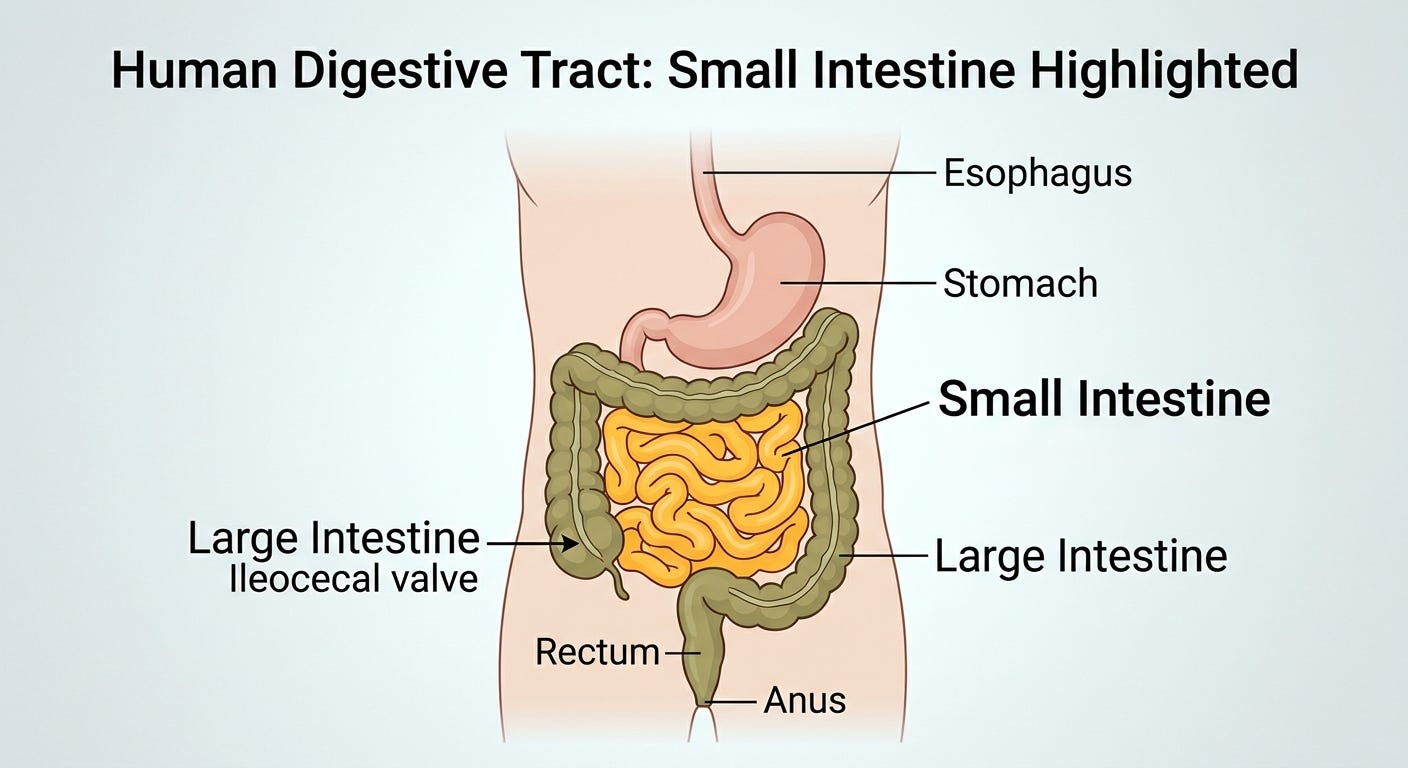
Your digestive tract is not uniform, different sections do different jobs and the populations of microorganisms living in each section are different. Your large intestine (the colon) is home to trillions of bacteria. That is where most fiber fermentation is supposed to happen, and the byproducts of that fermentation, including short-chain fatty acids, are genuinely beneficial.
Your small intestine is different: this is where most nutrient absorption takes place, and under normal conditions it hosts relatively few bacteria. Small intestinal bacterial overgrowth (SIBO) is what happens when bacteria proliferate in the small intestine where they do not belong. These misplaced organisms ferment food before your body has a chance to absorb it, producing gas, pain, and digestive disruption in the wrong location.
Small intestinal fungal overgrowth (SIFO) is the same concept with a different organism: fungal species, most commonly Candida, overgrow in the small intestine. SIBO and SIFO share risk factors, produce overlapping symptoms, and frequently coexist. According to a 2015 review in Current Gastroenterology Reports, SIFO was found in up to 34% of patients who also had SIBO (Erdogan & Rao, 2015). One important distinction: SIBO has a substantially stronger evidence base. SIFO is a real and emerging area of research, but the literature is thinner and no validated non-invasive diagnostic test exists for it.
How Common Is This?
The true prevalence in the general population is unclear. A comprehensive review in Cureus estimated that SIBO has been detected in anywhere from 0 to 20% of healthy controls, depending on the diagnostic method used (Achufusi et al., 2020). That wide range tells as much about the limitations of current testing as it does about the condition itself.
Where the numbers become more clinically relevant is in people with digestive symptoms. A 2020 systematic review and meta-analysis of 25 case-control studies, published in the American Journal of Gastroenterology, found that SIBO was present in approximately 31% of patients with irritable bowel syndrome (IBS), with IBS patients roughly 3.7 times more likely to have SIBO than controls. When the analysis was restricted to the 15 highest-quality studies, that association grew stronger (Shah et al., 2020).
For SIFO, two studies found that roughly one in four patients with unexplained gastrointestinal symptoms had fungal overgrowth on duodenal aspirate culture: 26% in one study (24 of 94 patients) and 25% in a second (38 of 150 patients). The most common organisms were Candida species (Erdogan & Rao, 2015; Jacobs et al., 2013). The findings are preliminary but suggest SIFO is not rare among people with chronic, unexplained digestive symptoms.
A systematic review and meta-analysis in Scientific Reports found that a significant proportion of patients who meet the diagnostic criteria for IBS in specialty care actually have identifiable organic conditions, including SIBO, bile acid diarrhea, and carbohydrate malabsorption (Poon et al., 2022). The overlap between IBS symptoms and SIBO is precisely why SIBO is frequently missed.
Common SIBO/SIFO Symptoms
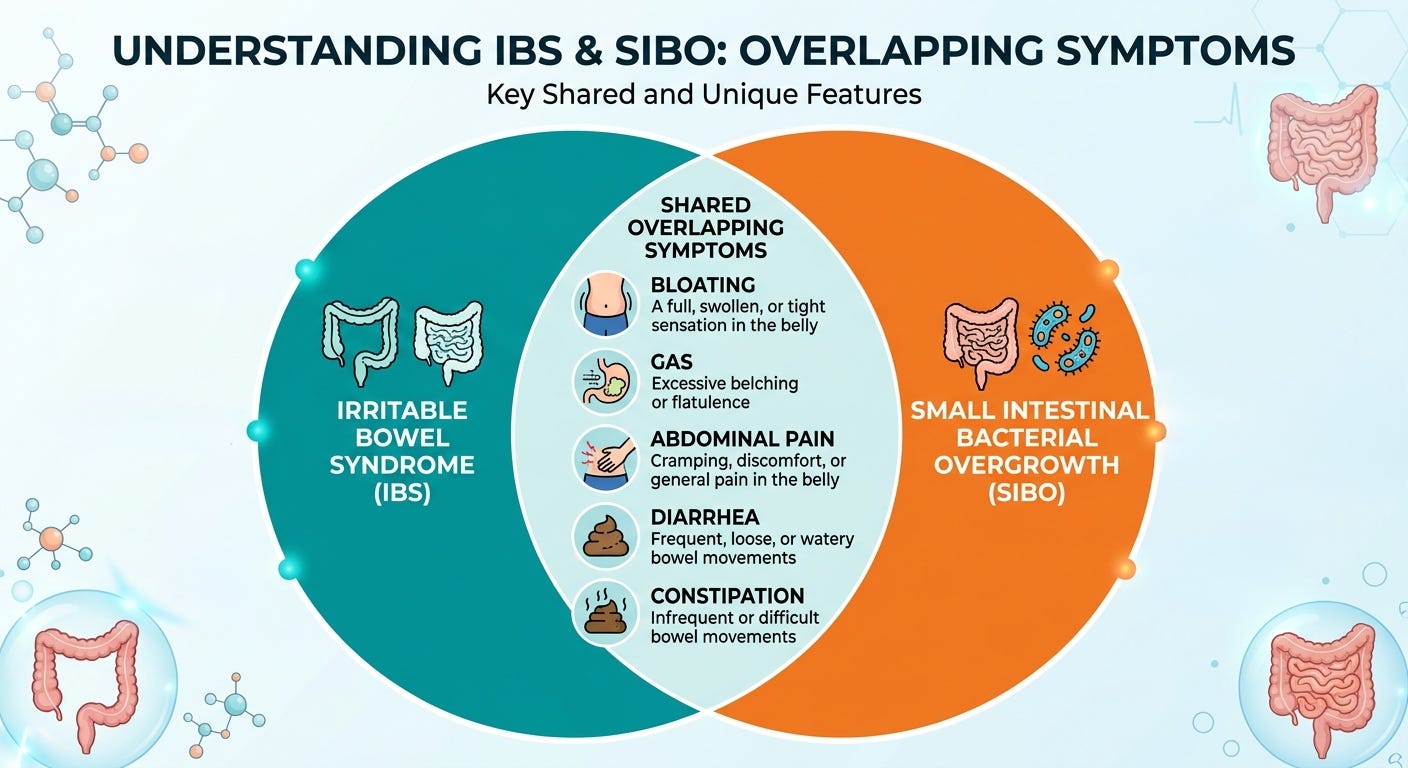
The symptoms of SIBO and SIFO are nonspecific, which is a large part of the diagnostic challenge. They include:
Bloating and abdominal distension
Excessive gas and flatulence
Abdominal pain
Diarrhea (more common with hydrogen-dominant SIBO)
Constipation (more common with methane-dominant SIBO)
Nausea and belching
Every one of these symptoms also appears in IBS, food intolerances, and a dozen other conditions. A take away point: if you have been diagnosed with IBS and your symptoms are not improving, or if increasing your fiber intake is making you worse, SIBO is worth investigating.
Why This Matters
The risk factors for SIBO are commonly found in people with metabolic syndrome: proton pump inhibitor (PPI) use, diabetes, and conditions that affect gut motility. A 2013 study in Alimentary Pharmacology and Therapeutics found that both PPI use and intestinal dysmotility were independent risk factors for bacterial and fungal overgrowth in the small intestine (Jacobs et al., 2013). The 2020 American College of Gastroenterology (ACG) Clinical Guideline on SIBO identifies diabetic enteropathy as a well-established predisposing factor (Pimentel et al., 2020).
If you are managing metabolic syndrome, you may be taking a PPI for reflux and you may have diabetes or pre-diabetes. Both of those conditions independently raise your risk for SIBO. Prior abdominal surgery, chronic narcotic use, along with age-related decline in gastric acid production and intestinal motility are additional risk factors.
Getting Tested
Breath testing is the most common diagnostic method. Glucose and lactulose hydrogen breath tests measure the gases produced when bacteria ferment carbohydrates. If gas production rises above a threshold within a specific time window, the test is considered positive.
The ACG Clinical Guideline acknowledges that both glucose and lactulose breath tests have significant limitations in sensitivity and specificity, meaning they miss a meaningful number of cases and sometimes produce false positives (Pimentel et al., 2020). The gold standard, jejunal aspirate culture (collecting fluid directly from the small intestine), is invasive and not widely available. For SIFO, no validated non-invasive test exists at all.
If you recognize these symptoms, consult a gastroenterologist. A negative breath test does not definitively rule SIBO out; your physician can interpret the results in the context of your full clinical picture.
Treatment Is Physician-Directed
Treatment for SIBO centers on antibiotics: rifaximin is the most studied option. A 2017 meta-analysis in Alimentary Pharmacology and Therapeutics, covering 32 studies and over 1,300 patients, found an overall eradication rate of approximately 71% (Gatta & Scarpignato, 2017). For methane-dominant cases, rifaximin is sometimes combined with neomycin. SIFO is treated with antifungals, typically fluconazole.
Recurrence is common because the underlying predisposing factors, whether PPI use, diabetes, dysmotility, or structural issues, often persist after treatment. This is not a reason to understand that long-term dietary management matters even after a successful antibiotic course.
The wellness and supplement space around SIBO is heavily marketed. Elemental diets and herbal antimicrobials are promoted aggressively online, sometimes with legitimate preliminary evidence, sometimes without. The evidence base for these alternatives is substantially weaker than for rifaximin. If you are exploring them, do so under medical supervision, not based on an influencer’s protocol.
A Nutritional Red Flag
Severe or longstanding SIBO can impair your body’s ability to absorb certain nutrients. The fat-soluble vitamins (A, D, E, and K), vitamin B12, and iron are the most commonly affected. If you have unexplained deficiencies in any of these nutrients alongside chronic digestive symptoms, raise both issues with your physician, they may be connected. Supplementation decisions should be made in consultation with your treating doctor, not independently.
If you enjoy evidence-based medical information, subscribe to receive these articles delivered to your mailbox every week.
Why Standard Fiber Advice Backfires
The issue is not fiber itself, is a specific category of carbohydrates called FODMAPs, an acronym for fermentable oligosaccharides, disaccharides, monosaccharides, and polyols. These are short-chain carbohydrates that are poorly absorbed in the small intestine and rapidly fermented by gut bacteria.
In a healthy gut, most FODMAP fermentation happens in the colon, where it produces beneficial compounds. In SIBO, the overgrown bacteria in the small intestine ferment these carbohydrates before your body can absorb them, producing gas, pain, and distension in a location not designed to handle it.
The low-FODMAP diet is the most evidence-based dietary approach for managing these symptoms. It was developed at Monash University in Australia using rigorous laboratory food testing, and systematic reviews support its use for short-term symptom improvement in IBS, with up to 70% of patients experiencing meaningful relief (Whelan & Staudacher, 2022). Evidence for its use specifically in SIBO, as opposed to IBS more broadly, is described in a 2022 review in Current Opinion in Pharmacology as “scant,” meaning the diet has been proposed to help but no studies have confirmed or denied whether it prevents SIBO recurrence (Biesiekierski & Tuck, 2022). The rationale is extrapolated from the strong IBS evidence base, which is reasonable given the symptom overlap.
The Five FODMAP Subgroups
FODMAPs are not a single substance. They are five categories of carbohydrates, each found in different foods:
Fructans: wheat, rye, barley, onion, garlic, artichokes, inulin, chicory root
Galacto-oligosaccharides (GOS): legumes, beans, lentils, chickpeas
Lactose: milk, soft cheeses, yogurt, ice cream
Excess fructose: apples, pears, mango, watermelon, honey, agave, high-fructose corn syrup
Polyols: stone fruits (peaches, plums, cherries), mushrooms, cauliflower, sugar alcohols (sorbitol, mannitol, xylitol)
Look at that list carefully: onion, garlic, wheat, legumes, apples, pears, cauliflower. These are foods that appear on every “eat more of this” list ever published, including in this publication. For most people, they are excellent choices. For people with SIBO, they are fuel for the overgrown organisms in the wrong part of the gut.

The Three-Phase Approach
The low-FODMAP diet is not a permanent elimination diet. It is a structured, three-phase clinical tool:
Phase 1, Elimination: Strict reduction of high-FODMAP foods for two to six weeks to establish whether symptoms improve.
Phase 2, Reintroduction: Systematic, one-at-a-time reintroduction of each FODMAP subgroup to identify which specific carbohydrates trigger your symptoms and at what dose.
Phase 3, Personalization: A long-term eating pattern that avoids only your specific triggers at your specific threshold doses, while reincorporating everything else.
This process is best done with the guidance of a dietitian experienced in FODMAP management. There is a practical reason for this beyond general caution: serving size is a critical variable that most internet food lists get wrong. A food can be low-FODMAP at one portion size and high-FODMAP at another. Reliable guidance requires portion-specific information, which is what the Monash University FODMAP app provides based on their laboratory testing.
The Downsides of Prolonged Restriction
Staying in the elimination phase too long has documented downsides. Multiple studies have found consistent reductions in Bifidobacteria abundance during strict FODMAP elimination, along with decreases in butyrate-producing bacteria and mucus-associated bacteria (StatPearls, 2026). There are also potential nutritional gaps in calcium, B vitamins, iron, and folic acid during prolonged restriction. These effects appear to be mitigated when patients move through reintroduction and personalization or use probiotic supplementation. The elimination phase is temporary by design.
What to Reduce Now
If you suspect SIBO is behind your symptoms, the following high-FODMAP foods are the most likely culprits. Reducing them is a reasonable, low-risk first step while you pursue a proper medical evaluation. This is not a substitute for diagnosis, it is something you can do today that may provide symptom relief and useful information for your physician.
Onion and garlic (among the most potent FODMAP sources, and present in most prepared foods)
Wheat-based bread, pasta, and cereals
Legumes: beans, lentils, chickpeas
Apples, pears, stone fruits, mango, dried fruits
Mushrooms and cauliflower
Honey, agave, high-fructose corn syrup
Sugar alcohols in sugar-free gum, mints, and diet products (sorbitol, mannitol, xylitol)
Better Fiber Choices
Having SIBO does not mean abandoning fiber, it means choosing fiber sources that provide bulk and nutritional benefit without rapidly feeding the overgrown organisms in your small intestine. The following foods are generally well-tolerated at standard serving sizes.
Vegetables (cooked preferred)
Cooking breaks down fiber structure, improving digestibility and reducing fermentability. Cooked vegetables are generally better tolerated than raw in SIBO.
Carrots: No measurable FODMAPs, one of the safest options.
Zucchini, spinach, bell peppers, green beans: Well-tolerated at typical serving sizes.
Eggplant: Tolerated at moderate portions.
Lettuce and salad greens, tomatoes, cucumber: Generally safe raw or cooked.
Potatoes: Plain preparation, a reliable, well-tolerated starch.
Fruits (moderate portions)
Choose low-fructose, low-sorbitol options and keep portions moderate.
Blueberries, strawberries, raspberries: Excellent choices with strong nutritional profiles.
Oranges, mandarins, kiwi: Well-tolerated citrus and tropical options.
Pineapple, cantaloupe, grapes: Good variety options.
Slightly underripe bananas: Better tolerated than fully ripe bananas, which have higher FODMAP content.
Grains and Starches
White rice (freshly cooked): A note here: cooled rice forms resistant starch that bacteria can ferment, so freshly cooked is better tolerated than leftover rice.
Quinoa: A complete protein source and generally well-tolerated grain alternative.
Oats: Tolerated at moderate portions for most people.
Seeds and Supplemental Fiber
Chia seeds and flaxseeds: Provide fiber and omega-3 fatty acids without high FODMAP content.
Psyllium husk: A soluble fiber that is generally well-tolerated and has a gentle effect on the digestive system. The ingredient in many OTC fiber products for constipation (Metamicil for example).
A Fiber Supplement Worth Knowing About
Partially hydrolyzed guar gum (PHGG) deserves specific mention because it is the one supplemental fiber with randomized controlled trial (RCT) evidence showing benefit during SIBO treatment. A 2010 RCT published in Alimentary Pharmacology and Therapeutics studied 77 patients with SIBO. Rifaximin combined with PHGG at 5 grams per day achieved an eradication rate of about 87%, compared to about 62% for rifaximin alone, a statistically significant difference. PHGG alone was essentially ineffective, with only about 7% eradication (Furnari et al., 2010).
PHGG is not a standalone therapy, its value is as an adjunct to antibiotic treatment. A separate RCT found that 6 grams per day of PHGG for 12 weeks significantly improved bloating in IBS patients compared to placebo, with no significant side effects (Niv et al., 2016).
Side effects of PHGG are mild and transient: some initial gas and bloating that typically resolve.
Caution if using taking metformin: large doses of guar gum (10 grams or more per day) may reduce metformin absorption. The dose studied in the Furnari trial was 5 grams per day, which is below the interaction threshold. If you are considering PHGG, take it at least two hours apart from metformin and discuss it with your physician.
What You Can Do Today
Understanding which fiber sources to choose while pursuing diagnosis can make a real difference in your daily comfort. Individual variation is real, and systematic reintroduction under professional guidance is how you find what works for your body.
A few principles to carry forward:
Cook your vegetables. Cooking generally improves tolerance by breaking down fiber structure and reducing fermentability.
Watch serving sizes. A food that is safe at a small portion may cause problems at a larger one. The Monash University FODMAP app provides portion-specific guidance and is a practical resource if you are pursuing this path with your provider.
Do not stay in elimination mode permanently. The restriction phase is a diagnostic tool, not a long-term diet. Work with a dietitian to move through reintroduction and personalization.
Get evaluated. If you recognize these symptoms, especially if fiber is making you worse, the first step is a conversation with your doctor or gastroenterologist. This is not a condition you diagnose or treat on your own, your physician can assess the full picture and determine next steps.
It Takes An Active Community
First, I want to thank Mr. Hamilton Creek for bringing this important issue to my attention, his thoughtful comments were the reason for this article.
The main objective of this site is to inform but also to foster a community with open two-way communication. If you have questions or want to learn more about a particular topic, please don’t hesitate to leave me a comment.
Found this article useful? Share your thoughts. Join the conversation below.
The Metabolic Archives is for educational and informational purposes only, and is not intended as medical advice, diagnosis, or treatment, and does not constitute a doctor-patient relationship. Do not adopt any recommendation discussed in any article or guides published here, make changes or abandon any prescribed medical treatment without prior consultation with your physician. Always seek the advice of your physician or other qualified health provider for any questions regarding your medical condition and recommended treatment options.
By reading this post, you acknowledge that you have read and agree to the Terms of Service of The Metabolic Archives, which govern all use of this content including restrictions on reproduction. © 2026 The Metabolic Archives. All rights reserved.