
Lifestyle Modification: The Most Powerful Treatment You Were Never Taught
Part Eight: How You Eat Matters, What You Were Never Taught About Meal Structure

The dietary conversation has often focused almost exclusively on food content while an entirely separate dimension of eating has gone unaddressed. The evidence shows that the behavioral architecture of a meal produces measurable metabolic consequences. The same meal eaten in the right sequence, right pace, and right time of day delivers dramatically different metabolic outcomes.
This installment covers three dimensions of that architecture: sequence, speed, and timing.
Sequencing Is A Metabolic Strategy
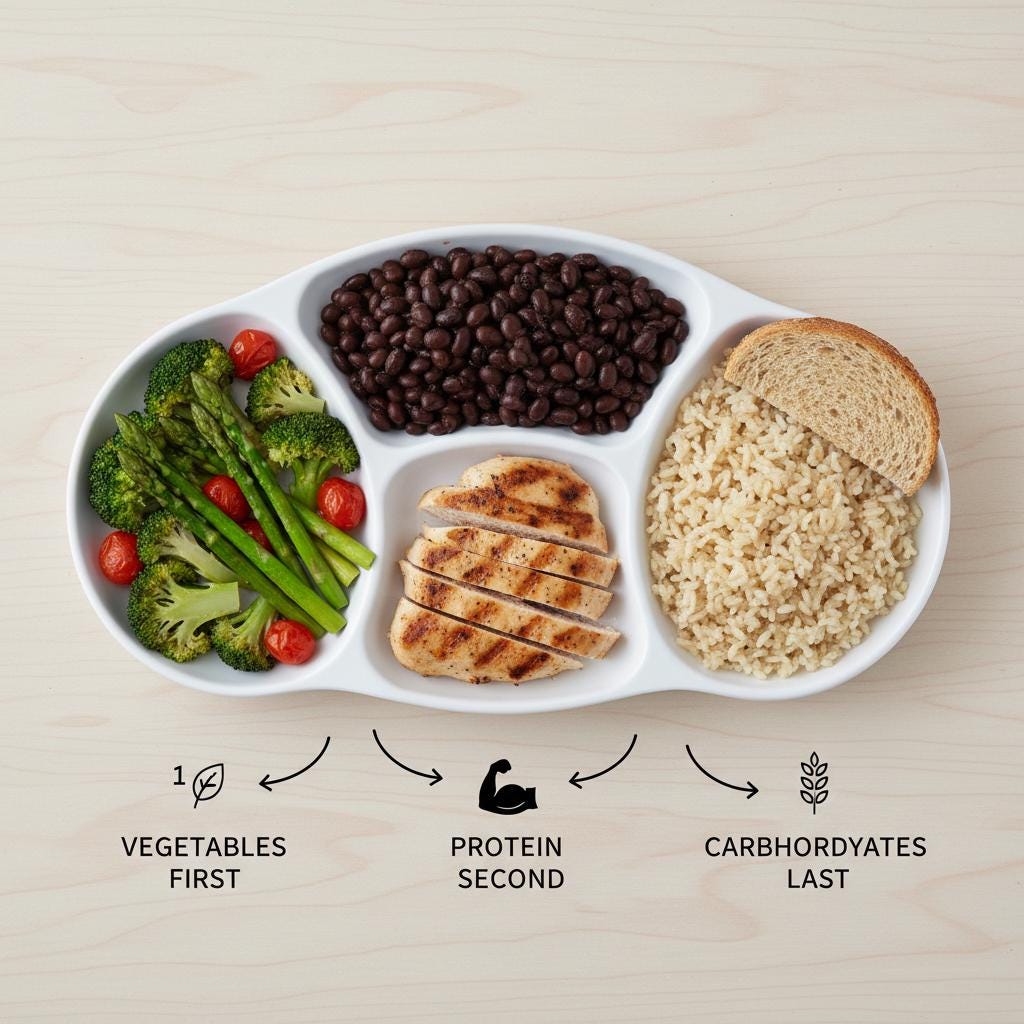
In a pilot randomized controlled trial of overweight adults with type 2 diabetes consuming a standard Western meal, the incremental area under the glucose curve over 120 minutes was 73% lower when vegetables and protein were consumed before carbohydrates compared to the reverse sequence (Shukla et al., Diabetes Care, 2015). Postprandial glucose levels were reduced by 28.6% at 30 minutes, 36.7% at 60 minutes, and 16.8% at 120 minutes. Postprandial insulin levels at 60 and 120 minutes were also significantly lower.
Japanese patients with type 2 diabetes and normal glucose tolerance, healthy adults in the United Arab Emirates in a randomized crossover trial, healthy Chinese adults across five different eating sequences in the PATTERN study, and women with gestational diabetes in a 2024 Frontiers in Nutrition randomized controlled trial, all showed significant reductions in postprandial glucose and insulin when vegetables and protein were consumed before carbohydrates (Imai et al., Diabet Med, 2013; Shukla et al., BMJ Open Diabetes Res Care, 2017; Tan et al., Clin Nutr, 2020; Al Khatib et al., 2024; Front Nutr, 2024). A 2025 study in Diabetes Care confirmed that sustained carbohydrates-last food order improved time in range and reduced glycemic variability in type 2 diabetes over extended follow-up (Shukla et al., 2025).
Fiber consumed first slows gastric emptying and buffers subsequent carbohydrate absorption. Protein consumed early stimulates incretin responses before the carbohydrate load arrives. Fat consumed before carbohydrates further delays gastric emptying. These effects are cumulative.
The take away point is simple enough: at every meal, eat vegetables first, follow by protein, and eat carbohydrates last. A meal with separately served rice or bread is immediately actionable: eat the protein and vegetables first, then the starch, and only if still hungry. Mixed dishes that do not permit easy separation are not a problem. Apply the sequence consistently where the structure allows, and do not stress where it does not. Even partial consistent application captures meaningful benefit. The barrier to implementation couldn’t be lower.
Ready, Set, Slow Down
A systematic review and meta-analysis published in Frontiers in Nutrition found that eating faster was associated with a 54% higher risk of metabolic syndrome and a higher risk of central obesity compared to eating slowly (Feng et al., 2021). A separate three-year prospective cohort study in a large Japanese population found that fast eaters had a 30% higher risk of developing metabolic syndrome, a 35% higher risk of central obesity, and a 37% higher risk of low high-density lipoprotein (HDL) cholesterol compared to non-fast eaters (Nagahama et al., 2015). A 2024 multicenter cross-sectional study and meta-analysis extended this picture further, finding a significant association between fast eating and metabolic dysfunction-associated steatotic liver disease (MASLD), a condition on the rise around the world (Nutr Diabetes, 2024).
The gut hormones that register fullness require time to rise in response to food entering the gastrointestinal tract. The conventional estimate is approximately 20 minutes between the start of eating and the meaningful arrival of satiety signals at the hypothalamus. Eating slowly allows satiety signaling to engage while food is still on the plate.
A randomized controlled crossover study in healthy young women found that eating vegetables first produced significant reductions in postprandial glucose and insulin regardless of eating speed, fast eating with vegetables first outperformed slow eating with carbohydrates first on both measures (Imai et al., Nutrients, 2023). Eating order is the more powerful of the two interventions when they compete.
The eating speed evidence is predominantly observational. Large randomized controlled trials isolating eating speed as a single variable against long-term metabolic outcomes have not been conducted. However, there are no observed adverse consequences associated to slow eating so for now this remains a reasonable and easy to implement recommendation.
The Clock Your Body Actually Runs On
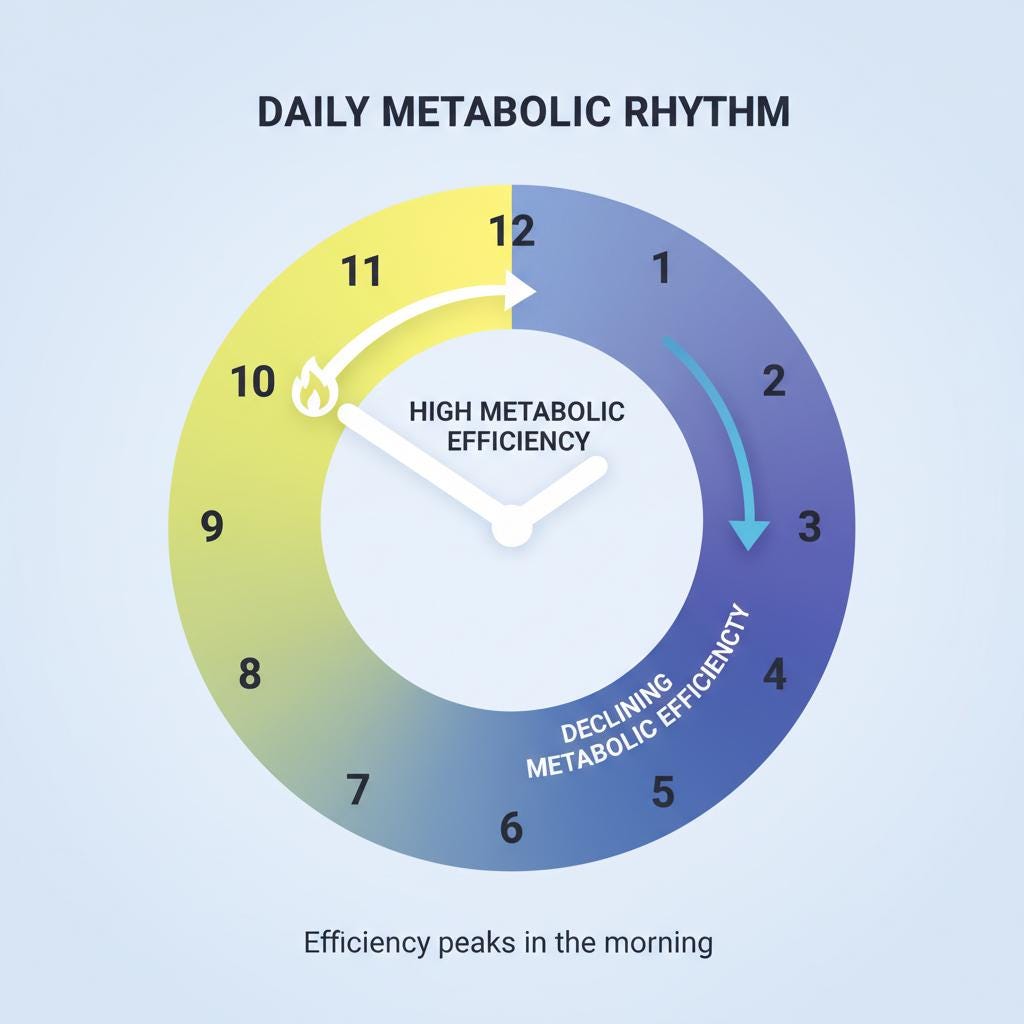
The breakfast-lunch-dinner construct is a social and industrial artifact. It was not designed around human metabolic biology and the evidence shows it.
The human body operates on a sophisticated internal timing system that governs hunger, satiety, metabolic rate, hormone secretion, and fuel utilization across a 24-hour cycle. Multiple metabolic hormones have diurnal variations. Eating when the clock says noon rather than when genuine hunger is present means consuming calories uncoupled from actual metabolic need; this is an independent driver of caloric overconsumption.
Diet-induced thermogenesis, the energy the body expends processing a meal, is higher after a morning meal than after an evening meal (PMC7997809; Nutrients, 2025). The body burns more calories processing the same food eaten in the morning than in the evening. The Western convention of the large evening meal is directly misaligned with this biology.
A 20-week weight loss trial found that participants whose food intake was weighted toward later in the day lost less weight and experienced slower weight loss despite identical caloric intake, identical energy expenditure, and identical sleep duration (Garaulet et al., Int J Obes, 2013). A separate randomized controlled trial comparing a large breakfast group to a large dinner group with identical total caloric intake, found that the large breakfast group lost significantly more weight and more waist circumference. It also showed greater decreases in fasting glucose, insulin, and insulin resistance, while reporting greater satiety, lower hunger, and lower ghrelin levels (Jakubowicz et al., Obesity, 2013).
If you enjoy evidence-based medical information, subscribe to receive these articles delivered to your mailbox every week.
A Protein-Rich Breakfast

Caloric intake should be weighted toward the earlier part of the day and the evidence is specific about what that meal should look like.
A randomized controlled trial of breakfast identified a meal protein threshold of approximately 30 grams to achieve consistent and superior satiety effects compared to lower protein breakfasts (Kamer et al., J Dairy Sci, 2024). At this threshold, the area under the curve for satiety, fullness, and satisfaction across the three hours following breakfast was significantly higher than carbohydrate-matched controls, while hunger, desire to eat, and prospective eating were significantly lower. Below this threshold, the satiety benefit of protein at breakfast is inconsistent across studies. A separate randomized crossover study comparing 30 grams of protein from plant-based versus animal-based breakfast sources found significant satiety hormone responses from both sources at equivalent protein content (Nyambe-Silavwe et al., PMC12612008).
Dietary protein stimulates the release of GLP-1, PYY, and CCK, gut hormones that suppress appetite, while simultaneously decreasing ghrelin (Kim et al., J Obes Metab Syndr, 2020). Protein also carries a greater thermic effect than carbohydrates or fat, meaning the body expends more energy processing it. The consequence of a protein-rich breakfast is reduced caloric intake not just at lunch but across the remainder of the day.
The typical American breakfast (cereal, toast, pastries, juice, sweetened yogurt) is carbohydrate-dominant, protein-poor, and engineered for palatability rather than satiety. It produces a rapid postprandial glucose excursion, a corresponding insulin response, and a return of hunger within two to three hours. Replacing it with a protein-rich meal reaching 25 to 30 grams requires no exotic ingredients: eggs, Greek yogurt, cottage cheese, smoked salmon, and legumes all qualify, individually or in combination.
Lunch, Supper, and the Architecture of the Day
The evidence supports a large lunch as the primary caloric event of the day weighted toward the midpoint of the active day rather than the end. This runs counter to the pattern most working adults practice: a handheld meal at a desk, food consumed in a car, or lunch skipped in favor of late-day snacking. Even a partial shift, a larger lunch and a lighter supper, moves you in the right direction.
The evening meal should be the lightest of the day, consumed at least three hours before the expected sleep time. This serves two purposes simultaneously: it aligns caloric intake with the period of declining metabolic efficiency and establishes the starting point of the overnight physiological fast.
Sleep Is the Fast
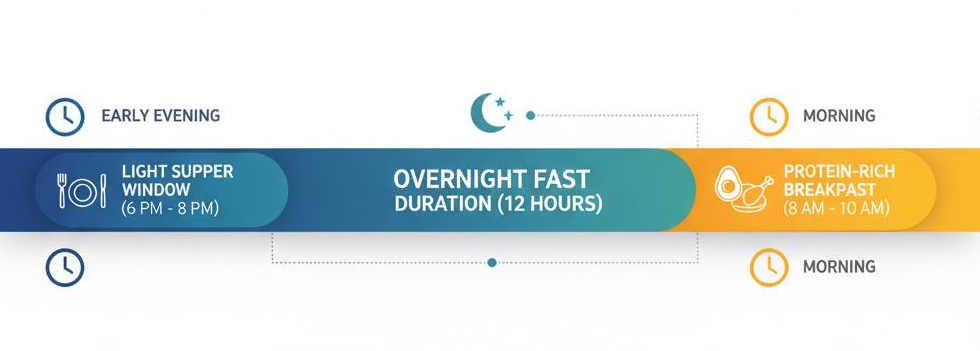
The overnight period between a properly timed light supper and the next morning’s breakfast is an active metabolic state; the fasting period the human body was designed to use.
During the overnight fast insulin falls to baseline allowing fat oxidation to predominate over glucose oxidation. Growth hormone rises during deep sleep, supporting tissue repair and lean mass maintenance. Autophagy, the cellular process that clears damaged proteins and organelles, activates in the fasting state. Peripheral circadian clocks in metabolic tissues reset in the suprachiasmatic nucleus (Shkorfu et al., Food Sci Nutr, 2025; Nutrients, 2025; J Umm Al-Qura Univ Med Sci, 2025).
A randomized controlled trial in 39 overweight and obese participants found that extending overnight fasting duration by three hours, specifically ensuring the last meal was consumed at least three hours before habitual sleep time, producing a 13 to 16 hour overnight fast, significantly improved nighttime autonomic balance. It decreased blood pressure, increased blood pressure dipping, and enhanced glucose regulation compared to control participants maintaining habitual eating patterns (Arteriosclerosis, Thrombosis, and Vascular Biology, 2025).
Many people attempting intermittent fasting time their fasting window to coincide with the morning skipping breakfast to extend the fast into the late morning or early afternoon. This inverts the biological logic entirely, eliminates breakfast and displacing eating time into the afternoon and evening when metabolic efficiency is declining.
If you wish to practice intermittent fasting, the most cited schedule suggests 8 hour window to eat with 16 hour fast until the next day; is backed by science as beneficial for weight loss and metabolic health, particularly when caloric intake happens between the hours of 7:00 am and 3:00 pm.
The Complete Architecture
This is the right architecture is now clear.
A protein-rich breakfast consumed within a reasonable time after waking. A substantial, sit-down lunch as the primary caloric event of the day. A light early supper consumed at least three hours before sleep. An overnight fast that resets the metabolic and circadian systems in preparation for the next morning. Within each meal: vegetables first, protein second, carbohydrates last, and eaten at a slower pace that allows proper satiety signaling.
No new foods, calorie counting, apps, or supplements. It requires only that you eat the right things in the right order at the right time and that you take long enough to finish so your body can tell you when it is done.
Part Eight discuss the individual food components of the meal itself.
Found this article useful? Share your thoughts. Join the conversation below.
Educational content on The Metabolic Archives is free, because medical information should be accessible to everyone. If you find value and want to support the work, a paid subscription is available and genuinely appreciated. Visit the About Page for additional information.
The Metabolic Archives is for educational and informational purposes only, and is not intended as medical advice, diagnosis, or treatment, and does not constitute a doctor-patient relationship. Do not adopt any recommendation discussed in any article or guides published here, make changes or abandon any prescribed medical treatment without prior consultation with your physician. Always seek the advice of your physician or other qualified health provider for any questions regarding your medical condition and recommended treatment options.
By reading this post, you acknowledge that you have read and agree to the Terms of Service of The Metabolic Archives, which govern all use of this content including restrictions on reproduction.
© 2026 The Metabolic Archives. All rights reserved.
I would have said 'protein first, vegetables second if they're green and not starchy, then skip the darn carbs or just eat a spoonful of rice, one grain at a time'.